Free printable sprouting guide with soak times, rinses per day, days to harvest and seed amounts for 53 seeds, beans and grains. Includes jar method steps, troubleshooting, safety basics and a rinse log. Instant download, nothing ships.
What is inside the free sprouting guide
- A soak, rinse and harvest chart for 53 crops: soak time, rinses per day, days to harvest, light before harvest, seed per quart jar, ease of growing and crop notes
- The jar method in 7 steps, plus a day by day rinse rhythm and a seed amount guide for pint, quart and half gallon jars
- Troubleshooting: root hairs versus mold, slimy jars, seeds that will not sprout, and sprouting in a cool or warm kitchen
- Safety pages: how to choose sprouting seed, who should avoid raw sprouts, seeds you should never sprout, and crops that must be cooked
- Greening, harvest, drying and fridge storage times
- A printable sprout log with a 7 day rinse checklist
- Clickable links to our crop guides and sprouting blog when you open the guide on a screen
Sprouting guide at a glance
| Guide | The Sprouting Guide by On The Grow |
| Topic | Seeding, soaking, rinsing and harvesting sprouts at home |
| Crops covered | 53 seeds, beans and grains (46 jar crops and 7 tray or clay crops) |
| Chart columns | Method, soak, rinses a day, days to harvest, light, seed per quart jar, ease, notes |
| Vessels | Glass jar, stacking sprouting tray and clay saucer |
| Seed amounts | Per US quart jar (tray crops are per tray) |
| Timing source | Averaged from the published guidance of five sprouting seed suppliers |
| Extras | Sprout log, 7 day rinse checklist, troubleshooting, never sprout list |
| Length and size | 9 pages, US Letter, chart pages in landscape |
| Price | Free |
| Delivery | Instant download, nothing ships |
| Language | English |
| Publisher | On The Grow, LLC |
| Last updated | November 2026 |
Quick answers from the chart
- Soak times run from 30 minutes (quinoa) to 12 hours.
- 44 crops are rinsed twice a day, 8 crops three times, and soybean four times.
- First harvest runs from day 1 to day 15, and the middle crop is ready from day 4.
- 27 of the 53 crops have a suggested light time, usually the last 12 to 48 hours before harvest.
- Beginner crops that are all rated Easy: broccoli, alfalfa, radish, mung bean and lentil.
Best for
- New sprouters who want the soak, rinse and harvest timing for each crop in one place
- Growers trying a new seed, bean or grain and wanting a starting seed amount for a quart jar
- Anyone who wants a printed chart on the fridge and a log to track jars by hand
- Growers choosing between a jar, a stacking tray and a clay saucer
Not for
- Microgreens, which grow in a medium and are cut above it (see the microgreen guides below)
- Nutrition figures, since the guide does not include nutrition panels
- Anyone looking for a safety guarantee, because raw sprouts always carry some risk
Crop guides and related reading
- How to Sprout Seeds at Home: The Complete Guide
- How often to rinse sprouts: a rinsing schedule
- Alfalfa sprouts in a mason jar, broccoli sprouts in a mason jar, lentil sprouts in a mason jar and salad mix sprouts in a mason jar
- Stagger your sprout jars every week
- The cost of growing sprouts at home
- Sprouting supplies we recommend
- Growing microgreens instead? Get our free microgreen seeding guide or the tray specific microgreen seeding guide.
Keep your schedule without paper
When you want reminders instead of a printed chart, Sprouting Tracker by On The Grow sets the soak, rinses and harvest day for each crop, fills in the seed amount for your crop and jar size (and lets you adjust it), reminds you at your own times, and records seed used, harvest weight and cost per jar. It works in any browser and is now on Google Play for Android. On iPhone, open it in Safari and add it to your Home Screen (iPhone reminders need iOS 16.4 or later with the Home Screen install). An Apple App Store version is in the works. Start your 7-day free trial.
Frequently asked questions
How long should I soak seeds for sprouting?
Soak times in the guide run from 30 minutes (quinoa) to 12 hours. Broccoli soaks 4 to 8 hours, alfalfa 8 hours, mung bean 12 hours and lentils 8 to 12 hours. A few crops, such as amaranth and the tray crops, need no soak at all.
How often should I rinse sprouts?
Most crops are rinsed twice a day. Eight crops (adzuki bean, amaranth, buckwheat, chickpea, fava bean, mung bean, peanut and sunflower) are rinsed three times a day, and soybean four times. Drain thoroughly after every rinse. For more on timing, read our rinsing schedule guide.
How much seed do I put in a quart jar?
The guide lists the seed amount for one US quart jar for every crop, from 1 tablespoon for alfalfa to 1 cup for buckwheat and sesame. Broccoli is 2 tablespoons, mung bean 1/3 cup and lentils 1/2 cup. A pint jar takes about half, a half gallon about double, and it is always better to under-fill than over-fill.
How many days until sprouts are ready to harvest?
First harvest runs from day 1 (buckwheat, sunflower, sesame, quinoa and oats) to day 15 (onion, onion chives and leek). The middle crop is ready from day 4. Every crop has a harvest window of several days, not a single day.
Which seeds should I never sprout?
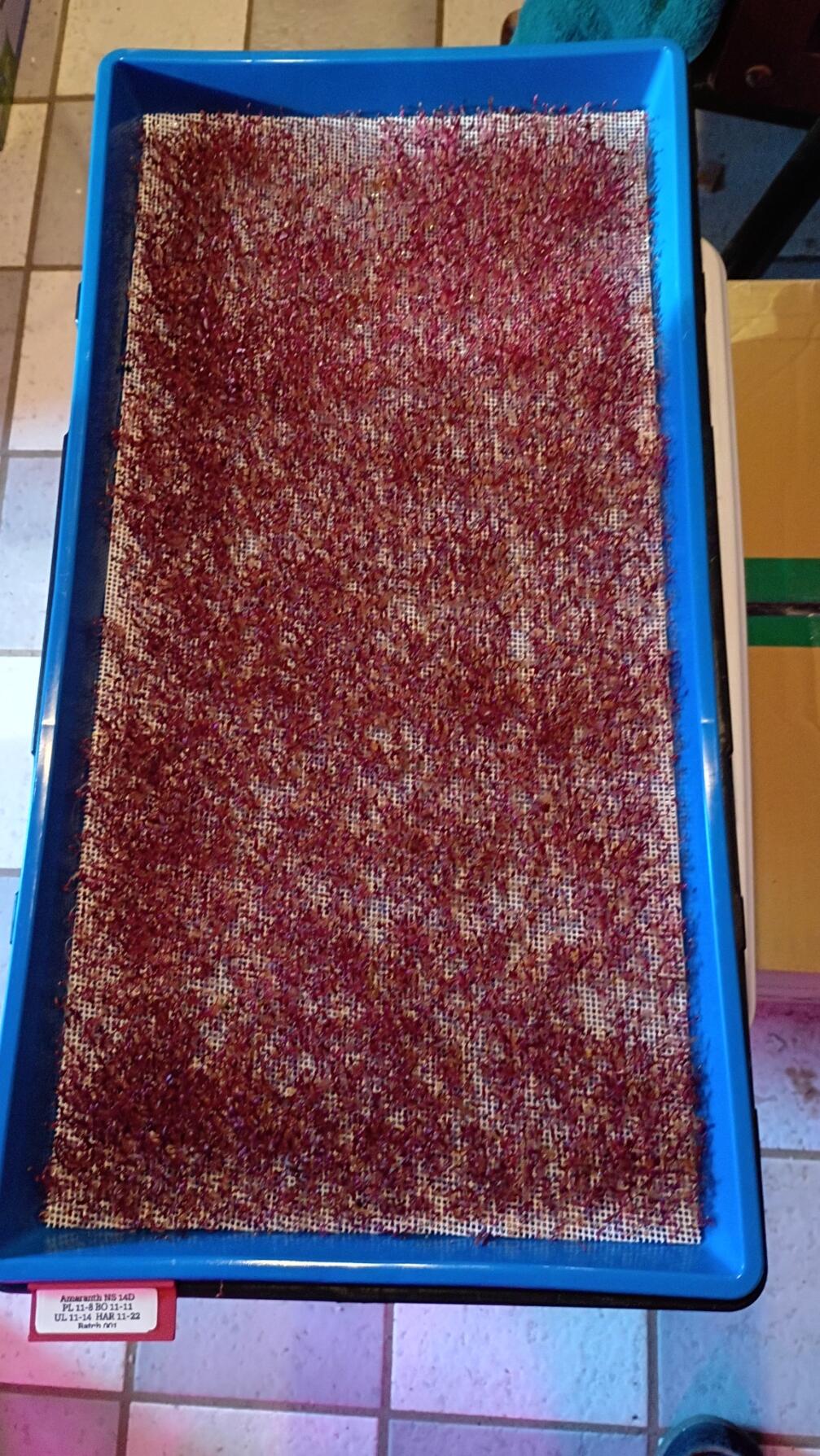
Never sprout kidney bean, lima bean, sorghum, lupini, or tomato, pepper, eggplant and potato seed. Soybean and fava bean must be cooked before eating, and people with G6PD deficiency should avoid fava bean in any form. Gel-coat seeds such as chia, flax, basil, cress, arugula and watercress never go in a jar and are grown on clay or a tray instead.
Are raw sprouts safe to eat?
Raw sprouts have been linked to foodborne illness, and they are not for everyone. Children, older adults, pregnant people and anyone with a weakened immune system should avoid raw sprouts and eat them only if thoroughly cooked. The guide covers seed choice, clean equipment, drainage and cold storage, but rinsing is a quality step and does not decontaminate seed, so no guide can make sprouts risk free.
Can I use this guide for microgreens?
No. This guide is for sprouts, which grow in water and are eaten whole. Microgreens grow in a medium and are harvested above it. For microgreens, see our free microgreen seeding guide and our tray specific microgreen seeding guide.
Can I print the guide at home?
Yes. It is 9 pages on US Letter paper, and the two chart pages print in landscape. When you open the guide on a screen, the links to our crop guides and blog posts are clickable.
Disclaimers
Food safety: Sprouts are grown in warm, humid conditions that can support bacterial growth, and raw sprouts have been linked to foodborne illness. Always use seed specifically labeled and tested for sprouting, keep your equipment sanitized, rinse and drain thoroughly, and refrigerate promptly. Children, older adults, pregnant people, and anyone with a weakened immune system should avoid raw sprouts and eat them only if thoroughly cooked. When in doubt, throw the batch out.
Results: Timings and seed amounts are starting points based on averaged supplier guidance. Results vary with temperature, seed lot and technique.
Ownership: This guide belongs to On The Grow, LLC and is free for our community and customers. It may not be sold, copied or redistributed.
Affiliate links: Some links inside the guide are affiliate links, and we may earn a commission if you buy through them. See our Disclaimer and Affiliate Disclosure.
Delivery: This is a free digital download. No physical item ships, and no returns or refunds apply.
Sprouting Tracker: Accounts, subscriptions, billing and support for Sprouting Tracker are handled at sproutingtracker.com, not onthegrow.net.