Broccoli Sprouts vs. Broccoli Microgreens: What's the Difference?
If you have been searching broccoli sprouts vs. broccoli microgreens, here is the short version: they come from the exact same seed, but they are two different foods grown two different ways. Broccoli sprouts are germinated in water in a jar and eaten whole, roots and all, in just a few days. Broccoli microgreens are grown on a medium under light for a week or more, and you harvest only the stems and leaves. We grow both at home, and here is everything we have learned about how they differ in growing time, flavor, nutrition, food safety, and which one earns a spot on your counter.

Quick Answer: Broccoli Sprouts vs. Broccoli Microgreens
Broccoli sprouts and broccoli microgreens come from the same seed, but they are different foods. Sprouts grow in water in a jar, are eaten whole including the root, and are ready in about 6 to 7 days. Microgreens grow on a medium under light, are cut above the root line, and are ready in about 8 to 11 days. Raw sprouts carry a higher food safety risk than microgreens, and that is the biggest practical difference between them.
- Broccoli sprouts are the germinated seed plus the very first root and shoot. You grow them in water in a jar, eat the whole thing, and they are ready in about 6 to 7 days.
- Broccoli microgreens are the young seedling after the first leaves (cotyledons) have opened under light. You grow them on a medium, cut the stems and leaves above the root line, and they are ready in about 8 to 11 days.
People often assume sprouts and microgreens are the same thing with two different names. They are not. Both start from broccoli seed, but they are harvested at different stages of growth and grown using completely different methods. If you want the broader picture across every crop, we cover the whole topic in our full sprouts vs. microgreens comparison, and our four-stage comparison adds baby greens and mature greens to the picture. This post zooms in on broccoli specifically, since it is the crop people ask about most.
What Are Broccoli Sprouts?
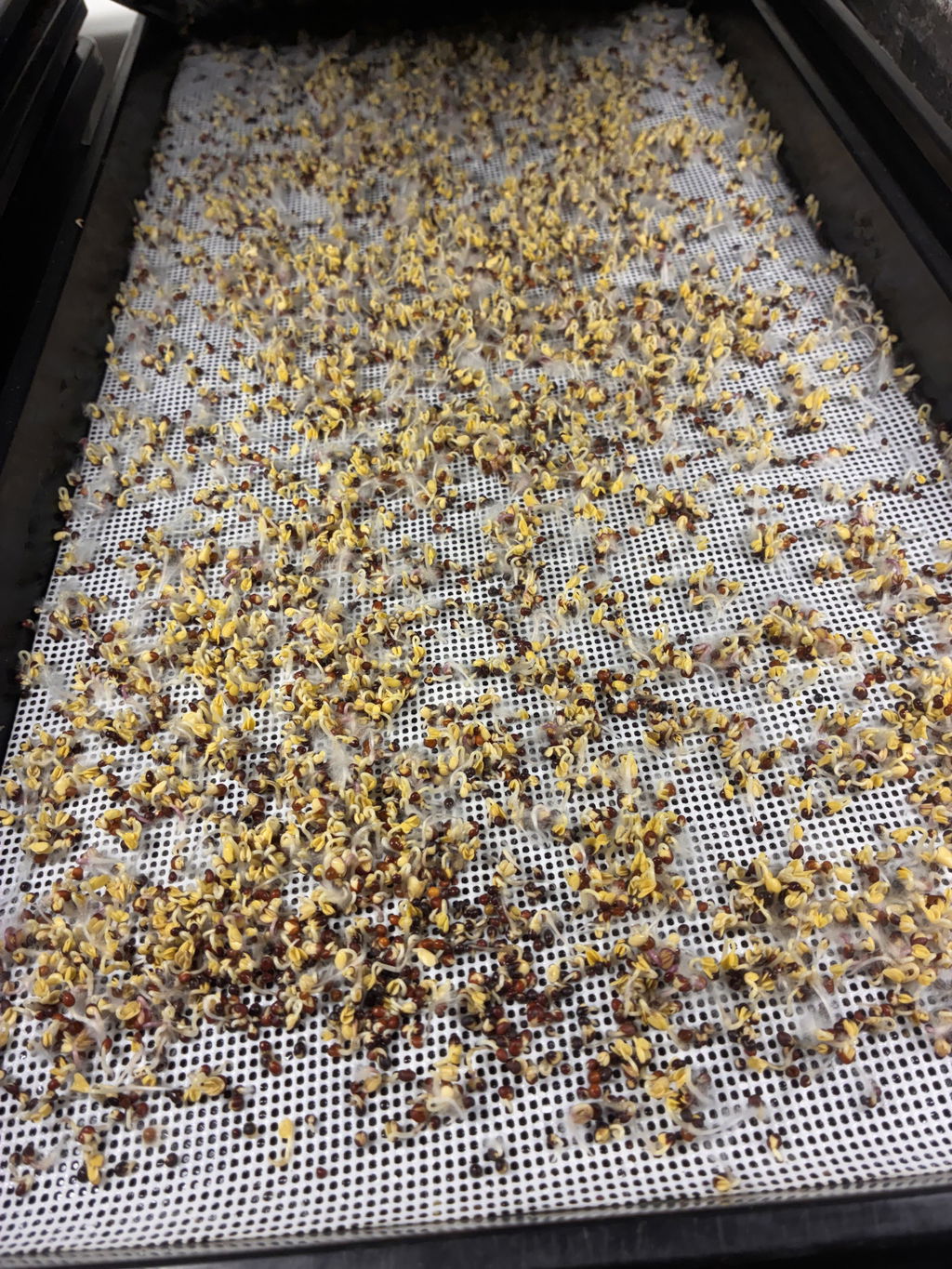
Broccoli sprouts are grown entirely in water, with no soil and no light needed. You soak the seeds, then rinse and drain them a few times a day inside a jar until the little white shoots and roots emerge. Because the seed, root, and shoot are all eaten together, sprouts are the fastest way to get from seed to plate.
The easiest way to start is with a complete sprouting jar kit. This sprout jar kit on Amazon is nearly identical to the one we used to sell and show in our videos, and it comes with everything you need to get growing. If you already have wide-mouth mason jars and just want to add the lids, our sprouting lids are a simple option. If you would rather use stacking sprouting trays than jars, we no longer carry those either, but the ones we recommend are in our Amazon sprouting tray list. For the full gear rundown, see our sprouting supplies guide and the sprouting supplies list we put together on Amazon.
Here is the basic jar method we use:
- Add about 16 grams of broccoli seed to a wide-mouth jar with a sprouting lid.
- Soak overnight, then drain fully.
- Rinse and drain two to three times a day, keeping the jar tilted at an angle so water drains out.
- Keep them in low light or a dark spot for most of the cycle.
- Harvest around day 6 or 7, then eat within a few days.
Our full walk-through is in how to grow broccoli sprouts in a mason jar, and if you are brand new to jar sprouting, our complete guide to sprouting seeds at home covers the whole method. The rinse schedule is the part that trips people up, so we break it down in how often to rinse sprouts and how to never miss one, and we cover a way to automate it in the tracker section below.
One thing we always stress: only use seed specifically labeled and tested for sprouting from a reputable supplier. Never use garden seed, bulk food-grade seed, or bird seed, since those are not tested for the pathogens that matter in a jar you eat raw. True Leaf Market carries seed for sprouting as well as microgreens. Our seed quality and food safety guide walks through why this matters.

What Are Broccoli Microgreens?
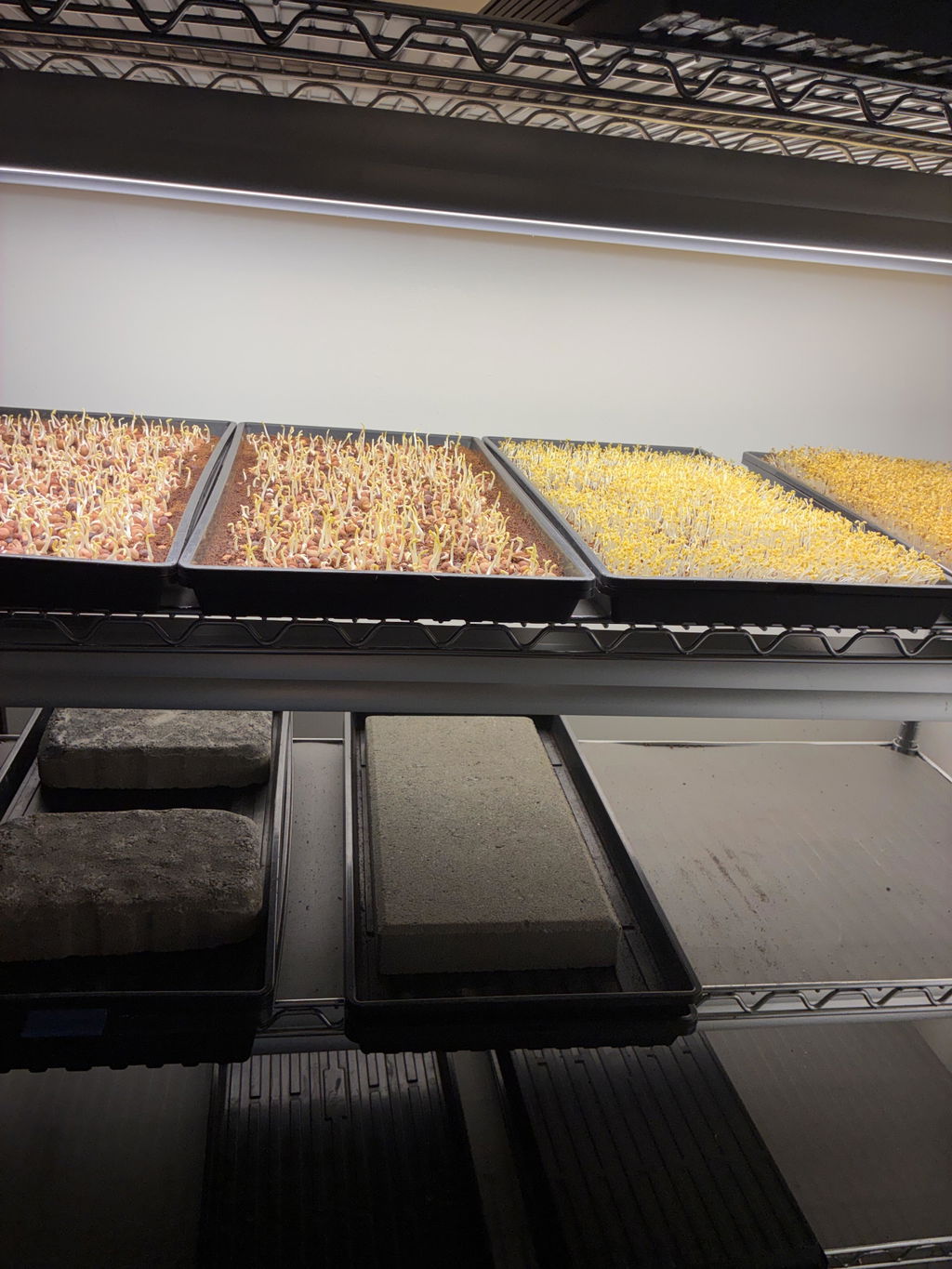
Broccoli microgreens are grown one stage further along. Instead of eating the whole germinated seed, you let the seedlings grow on a medium under light until the cotyledons are fully open and the first true leaves start to peek through. Then you cut just the stems and leaves above the root line and leave the roots behind in the tray.
Broccoli is one of the most beginner-friendly microgreens out there. Germination is fast and reliable, the growth is predictable, and the harvest window is forgiving. We have a complete walkthrough in our cornerstone guide on how to grow broccoli microgreens, but here is the quick version:
- Seed 15 to 20 grams on a 7x14 tray, or 20 to 25 grams on a 10x20, with no pre-soak needed.
- Mist the seeds with water. Stack a tray on top for a weighted blackout phase. Then mist with water 1 to 2 times per day or as needed.
- Move to light around day 4 or 5 once the canopy is mostly yellow plant rather than seed hulls.
- Switch to bottom watering. You can grow a fine tray on plain water, or add Ocean Solution 2-0-3 at 0.5 oz per gallon on coco coir or the reusable silicone grow medium for fuller, faster growth. We no longer carry Ocean Solution 2-0-3, so that link points to where we buy it now.
- Harvest around day 8 to 11.
Broccoli grows well on all three top mediums (soil, coco coir, and the 1.2mm reusable silicone grow medium). We recommend this coco coir if that is the route you take. For the full watering guide, see our complete guide to watering microgreens, and for a broader look at feeding, our best nutrients and fertilizers guide covers the options.
Figuring Out Seed Amounts for Any Tray Size
The number that trips up most new growers is how much seed to use, because it changes with every tray size. A 10x20 is twice the surface area of a 10x10, a 7x14 is smaller again, and a deep sprouting tray is different from both. Most people end up bookmarking a seeding chart and flipping back to it every single time they plant.
That was one of the first problems we solved when we built Microgreen Tracker, our grow-tracking web app. Seed amounts are stored as a density rather than a fixed gram number, so when you pick your tray size the app fills in the sow weight for you. Set 25 grams as your rate for a 10x20 and it will tell you 12.5 grams for a 10x10 on the same recipe. Switch that same recipe to a 7x14, a 5x5, or a custom footprint you measured yourself, and the number recalculates on its own. One recipe covers every tray you own, and you stop guessing whether you over-seeded.

If you would rather have a printable chart on the wall, our free tray-specific seeding guide PDF and free general seeding guide PDF both cover seed amounts by variety and tray.

Key Differences at a Glance
Same seed, very different greens. Here is how they stack up side by side:
- Growing time: Sprouts about 6 to 7 days. Microgreens about 8 to 11 days.
- What you grow them in: Sprouts in a jar of water. Microgreens on soil, coco coir, or a reusable silicone grow medium.
- What you eat: Sprouts are eaten whole, including the root. Microgreens are cut above the root line, so you eat only the stems and leaves.
- Light: Sprouts need little to no light. Microgreens need a light phase to green up.
- Flavor: Both are mild brassica. Sprouts have a crisp, juicy bite. Microgreens have a fuller green flavor with open leaves.
- Shelf life: Sprouts are best eaten within a few days. Microgreens stored unwashed can last a week or more in the fridge.
- Food safety: This is the big one, and it deserves its own section.

Which Is More Nutritious?
This is the question that drives most of the searches, and the honest answer is that both are concentrated, nutrient-dense foods. The landmark 2012 study from the University of Maryland and USDA found that many microgreen varieties contained 4 to 40 times more nutrients than their mature counterparts. You can read the University of Maryland summary of the research here.
For broccoli specifically, the compound everyone talks about is sulforaphane. Broccoli microgreens contain glucoraphanin, a precursor compound that converts into sulforaphane when the plant tissue is chewed or chopped. Sulforaphane is one of the most studied phytonutrients in nutrition science, with research linking it to antioxidant activity, cellular detoxification, and reduced inflammation.
Broccoli sprouts have been studied extensively for their glucoraphanin and sulforaphane content, which is a big part of why they have such a strong reputation. Broccoli microgreens are also a rich source of the same precursor. Rather than crowning one a definitive winner, we think of them as two excellent ways to get more of the same beneficial compounds into your diet. Eat whichever one you will actually grow and eat consistently, because the most nutritious greens are the ones that do not end up forgotten in the back of the fridge. For a wider look at what makes microgreens nutritionally interesting, see why microgreens are so good for you.

Food Safety: An Honest Comparison
This is where broccoli sprouts and broccoli microgreens differ the most, and it is worth understanding before you choose.
Raw sprouts have a documented outbreak history. The FDA counted 46 sprout-associated outbreaks in the United States between 1996 and July 2016, accounting for 2,474 illnesses, 187 hospitalizations, and three deaths. Because sprouts are grown in warm, humid, standing-water conditions and eaten whole including the root, they carry a higher risk of bacteria like E. coli, Salmonella, and Listeria, and the agency has sprout-specific rules under the FSMA Produce Safety Rule. Sprouts are enjoyable to grow, but they call for seed tested for sprouting, careful rinsing, clean equipment, full drainage, and cold storage. Children, older adults, pregnant people, and anyone with a weakened immune system, including people undergoing cancer treatment, people with HIV or AIDS, and people with diabetes, should avoid raw sprouts and eat them only if thoroughly cooked.
The federal advice for at-risk groups to avoid raw sprouts does not extend to microgreens. They are grown with airflow and light, and the harvest method only takes the stems and leaves while the roots and any medium stay behind in the tray. That harvest practice is one of the main reasons we do not eat microgreen roots the way you eat a whole sprout. We break that down in why we don't eat microgreen roots like sprouts, and our post on whether you can eat microgreens raw answers the follow-up question most people have next.
Either way, clean equipment does a lot of the work. Our guide to cleaning and sanitizing trays and reusable grow mediums covers the routine we use between cycles.
None of this means microgreens are risk free, since leafy greens of every kind get recalled. It means the two foods carry different risk profiles, and microgreens carry a lower risk than sprouts, though lower is not zero.
How We Grow Each in Our Space
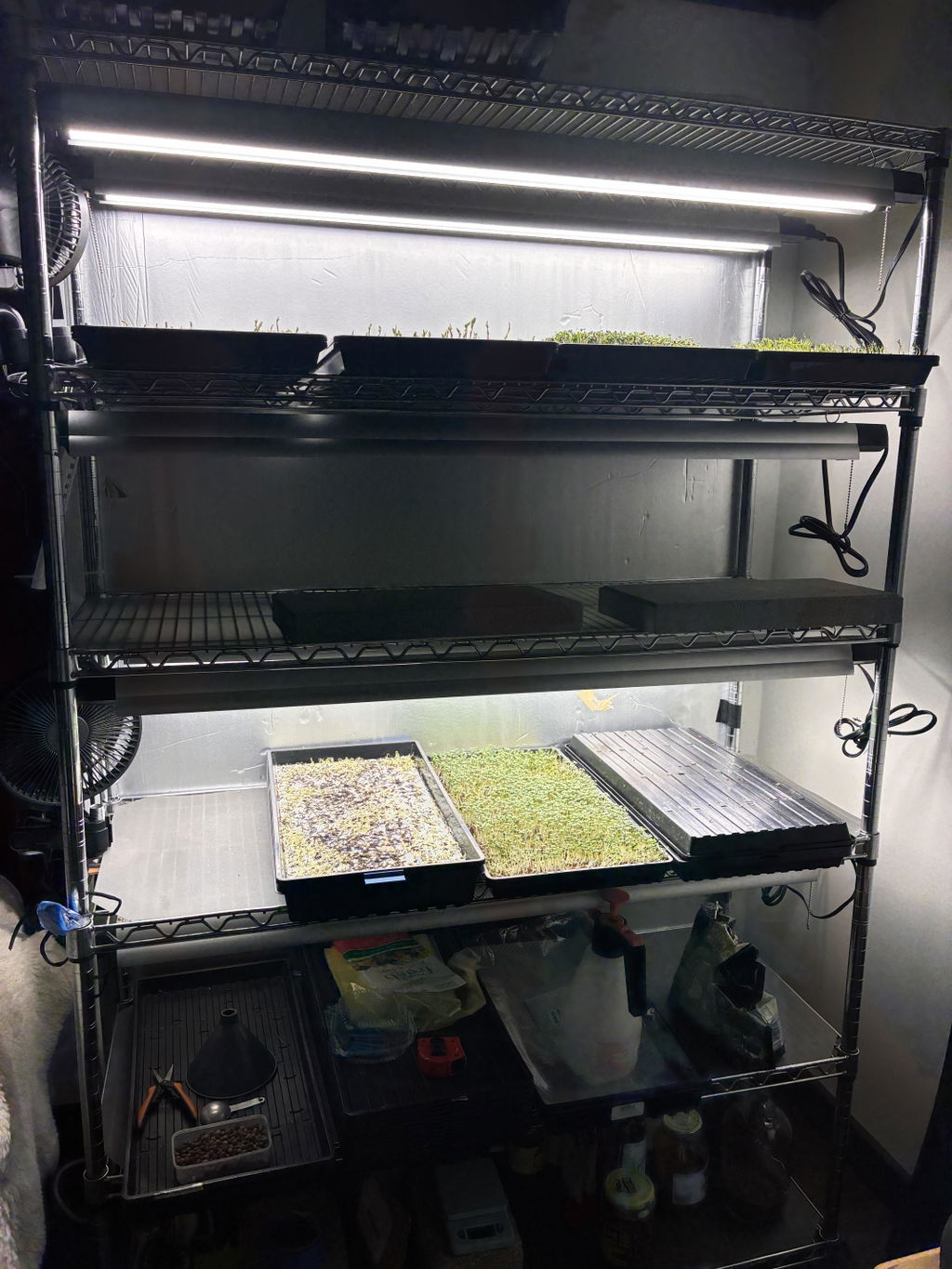
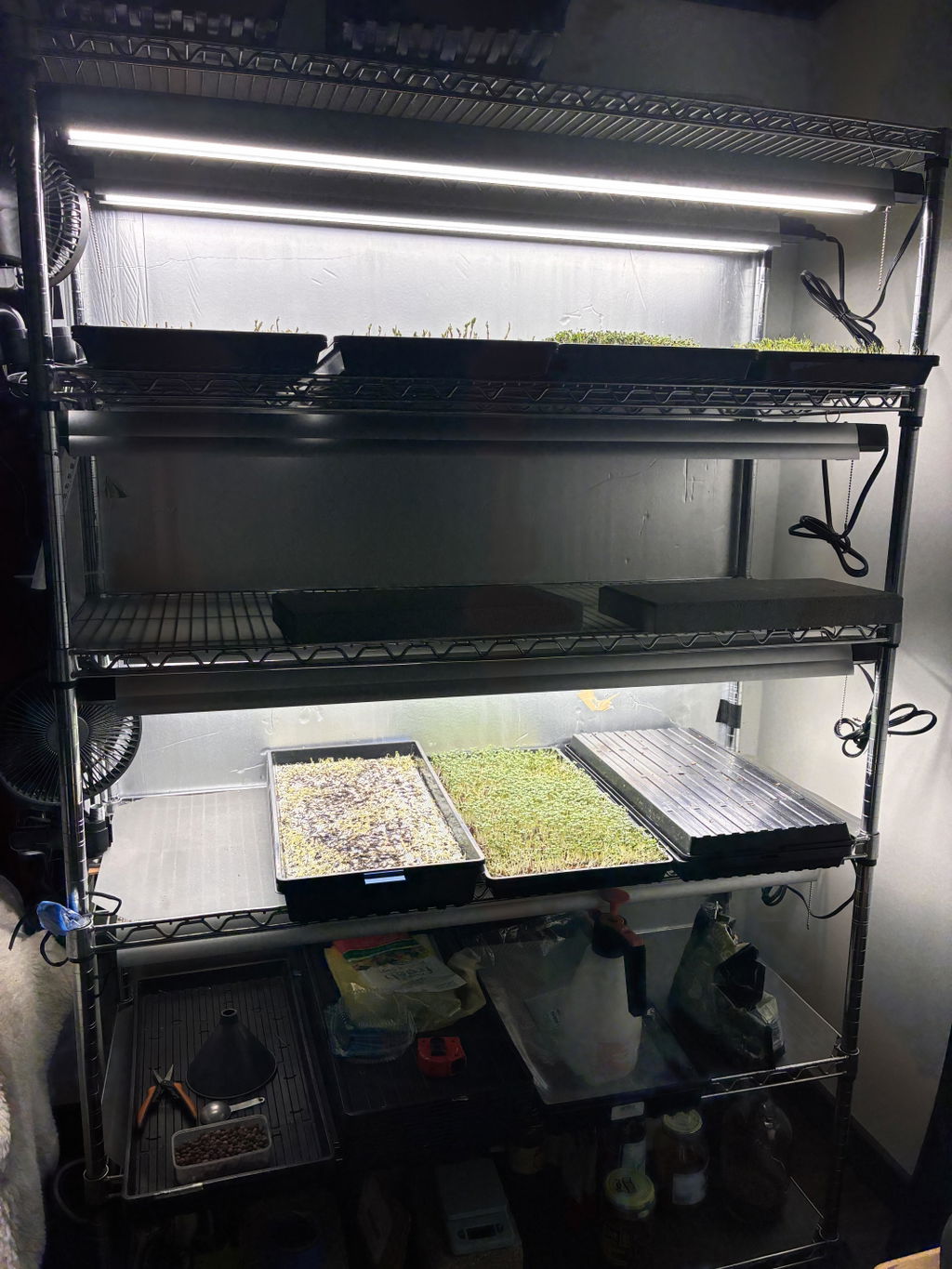
We have grown broccoli sprouts and broccoli microgreens side by side, and we like to share real numbers rather than vague claims. In one of our plain-water tests, the broccoli microgreen trays came in around 166 grams at day 10, and they actually germinated faster than the sprout jars did. We grow in a tightly controlled space, so treat that as a data point from our setup, not a promise for yours.
Watch our broccoli sprouts vs. microgreens grow below to see both methods growing at the same time.
For more grows like this one, browse our full video library, or join the 150,500+ subscribers watching along on our YouTube channel.
Which Should You Grow?
Both are great. Here is how we steer people:
- Grow broccoli sprouts if you want the fastest possible turnaround, the least equipment, and you are comfortable rinsing diligently and eating them fresh. A jar and a sprouting lid is all you need.
- Grow broccoli microgreens if you want a more forgiving process, a lower food-safety risk, a longer fridge life, and a green that works in more dishes. This is our personal pick for most home growers.
If you are brand new to either, our Beginner's Guide to Growing Microgreens PDF walks through every step, our beginner's blog guide covers the basics, and the 7x14 OTG Microgreen Tray Kit is the easiest way to start growing microgreens on your counter. For microgreen seed, we send everyone to True Leaf Market, where we get the organic broccoli seed we use in most of our grows, and our microgreen seeds page explains the difference between microgreen seed and sprouting seed. Once you have a harvest, our microgreen recipe hub has full recipes. Want to go deeper on everything? Our Microgreen Masterclass covers the full process from seed to harvest, and while it is focused on microgreens, it also includes a bonus section on sprouting, so you get both methods in one place.

Keeping Track of Sprouts and Microgreens
Growing both means two different routines. Sprouts run on a clock: a soak, then two or three rinses a day for about a week, and a missed rinse or a soak that runs long can spoil a jar. Microgreens run on stages: sow, germinate, light, water, and a harvest day. We built one app for each, because the routines have little in common. They are separate products with separate accounts, so pick the one that matches what you grow, or use both if you grow both like we do.
| Sprouting Tracker | Microgreen Tracker | |
|---|---|---|
| What it tracks | Sprouts in glass jars, on stacking sprouting trays, and on clay saucers | Microgreens in trays |
| Where to find it | Google Play for Android, or sproutingtracker.com in your browser, installs to the Home Screen on iPhone | Web app at microgreentracker.com, works in any browser and installs to your home screen |
| What it sets for you | Soak, rinses, and harvest window for each crop | Seed amount for your tray size, stages, and harvest date |
| Reminders | Soak, rinse, harvest, and a start-day reminder from the harvest planner | Watering, harvest, and delivery (web push) |
| Crop library | 53 sprouting crops | 81 crops and 286 varieties |
| Records | Seed used, harvest weight, rating, cost per jar, spreadsheet download | Harvest weight and quality grade, failure reasons, cost per tray, Grow Stats, CSV and Excel export |
| After the 7-day trial | $2.97 a month or $29.97 a year | From $3.95 a month or $39.95 a year |
Sprouting Tracker for the jar
Most sprouting guides call for the same rhythm: rinse in the morning, rinse in the evening, and do not let the jar sit in standing water. That is easy for two days and easy to lose track of by day five. Sprouting Tracker carries that schedule for you. Pick broccoli and a vessel, and the app fills in the soak, the rinses, and the harvest window, then sends a reminder at the clock times you choose. Every timing can be edited per crop, so you can match it to your own jars.
- If a rinse does not fit your day, skip it in one tap and your streak stays. If you tap something by mistake, Undo is there for 10 minutes.
- Running several jars? Pick the group and rinse them all in one tap.
- The harvest window shows as a range of days, and the harvest planner can tell you when to start each jar if you want broccoli ready every week.
- Each jar keeps a record: seed used, harvest weight if you weigh it, a rating, and cost per jar. If you enter what a tub of sprouts costs at the store, it works out what you saved against that price.
It works with glass jars, stacking sprouting trays, and clay saucers. Get it on Google Play for Android, or use it in your browser at sproutingtracker.com, where it also installs to your Home Screen on iPhone. One account works on both. It keeps you on schedule. It does not make sprouts safe, and rinsing on time does not decontaminate a batch.

Microgreen Tracker for the tray
Tray growing is a different rhythm, with stages that depend on the crop. Microgreen Tracker turns that into a short list of what needs doing today, so you are not working it out from memory.
- It scales your seeding rate to any tray size, as covered above, and it projects your harvest date the moment you log the tray.
- Web push reminders cover watering and harvest, at times you choose.
- It costs out each tray from seed, medium, fertilizer, electricity, and overhead, and Grow Stats shows what each crop produces.
- If a tray fails, you log a reason, so a bad batch becomes something you can learn from.
- Simple Mode hides the extras for new growers, and the full toolkit is one switch away.
It is a responsive web app that works in any phone or desktop browser and installs to your home screen, with no app store involved. To see how it works, start with Meet the Microgreen Tracker, then plant a broccoli tray with our first tray tutorial.
Trials and pricing
Each app starts with a 7-day free trial, and each takes a card at the start with nothing charged until the seven days are up. After the trial, Sprouting Tracker is $2.97 a month or $29.97 a year, and Microgreen Tracker plans start at $3.95 a month or $39.95 a year. Yearly billing saves about 16% on both. Neither app makes food safe, and neither replaces clean equipment and good seed.
Try Sprouting Tracker Free for 7 Days
Try Microgreen Tracker Free for 7 Days
Frequently Asked Questions
Are broccoli sprouts the same as broccoli microgreens?
No. They come from the same broccoli seed, but they are harvested at different growth stages using different methods. Sprouts are grown in water and eaten whole in about a week. Microgreens are grown on a medium under light for 8 to 11 days, and you eat only the stems and leaves.
Which is more nutritious, broccoli sprouts or broccoli microgreens?
Both are concentrated, nutrient-dense sources of the same beneficial compounds, including glucoraphanin, which converts to sulforaphane when chewed or chopped. Rather than declaring a clear winner, we recommend growing whichever one you will eat consistently. Research has found young plants can carry higher concentrations of some compounds than mature ones, though figures vary by method.
Are broccoli sprouts safe to eat raw?
Raw sprouts have been linked to repeated outbreaks because of their warm, humid growing conditions and the fact that the whole plant is eaten. Children, older adults, pregnant people, and anyone with a weakened immune system should avoid raw sprouts and eat them only if thoroughly cooked. For everyone else, they call for seed tested for sprouting, clean equipment, diligent rinsing, and cold storage. Microgreens carry a lower risk because only the stems and leaves are harvested above the root line, but lower is not zero.
How long do broccoli microgreens take to grow?
About 8 to 11 days from seed to harvest. Germination is fast, the blackout phase runs 3 to 4 days, and then they go under light until the cotyledons fully open and the first true leaves begin to show.
How much broccoli seed do I need per tray?
Roughly 15 to 20 grams on a 7x14 tray and 20 to 25 grams on a 10x20, with no pre-soak. For sprouts, about 16 grams per wide-mouth jar. If you grow across several tray sizes, Microgreen Tracker stores your seeding rate as a density and scales it automatically to whatever tray you select, so you do not have to recalculate or look up a chart each time.
Is there an app to track sprouts and microgreens?
Yes, one for each. Sprouting Tracker handles soak, rinse, and harvest timing for jar sprouts, and you can get it on Google Play for Android or use it in your browser at sproutingtracker.com, where it also installs to your Home Screen on iPhone. Microgreen Tracker handles trays, seed amounts, and harvest dates in any browser. They are separate products with separate accounts, and each starts with a 7-day free trial. Neither makes food safe.
Can you grow broccoli microgreens without soil?
Yes. Broccoli grows well on coco coir and on our 1.2mm reusable silicone grow medium, in addition to soil. On coco coir or silicone we add Ocean Solution 2-0-3 for fuller growth, since those mediums do not carry their own nutrients the way most quality soil does.
Final Thoughts
Broccoli sprouts and broccoli microgreens are two sides of the same seed. Sprouts win on speed and simplicity. Microgreens win on food safety, shelf life, and versatility. We grow both, but if you made us pick one for the average home grower, we would hand you a tray of broccoli microgreens every time. Either way, you are getting one of the easiest and most rewarding greens you can grow at home.
Keep Both Routines Off Your Mind
If you grow broccoli both ways, Sprouting Tracker handles the jar and Microgreen Tracker handles the tray.
Start Your 7-Day Free Trial of Sprouting Tracker
Start Your 7-Day Free Trial of Microgreen Tracker
Related Blogs You Might Enjoy
- How to Grow Salad Mix Sprouts at Home in a Mason Jar
- Sprouting Supplies: What You Need to Start Sprouting at Home
- How to Grow Broccoli Sprouts at Home in a Mason Jar
- How to Grow Alfalfa Sprouts at Home in a Mason Jar
- How to Grow Superfood Sprouts in a Mason Jar
- Sprouts vs Microgreens: Why We Grow Both at Home
- Broccoli Sprouts: Everything You Need to Know About Sprouting Broccoli
- How to Sprout Seeds at Home: Everything You Need to Know
- Is Growing Sprouts at Home Worth It? The Real Cost Per Jar
- How Often to Rinse Sprouts and How to Never Miss One
- How to Grow Broccoli Microgreens
- Sprouts vs. Microgreens: Key Differences
- Sprouts vs Microgreens vs Baby Greens vs Mature Greens: What's the Real Difference?
- What Are Microgreens and How They Differ From Sprouts
- Why We Don't Eat Microgreen Roots Like Sprouts
- Can You Eat Microgreens Raw? Safety, Nutrition and How To Eat Them
- Why Are Microgreens So Good for You? The Nutrition Explained
- Microgreens vs. Mature Vegetables: Grow Time and Water Usage Compared
- How to Grow Microgreens in a Sprouting Tray
- How to Grow Microgreens in 10x20 Trays
- How to Grow Radish Microgreens
- How to Grow Pea Microgreens (Pea Shoots): A Complete Guide
- How to Grow Red Cabbage Microgreens from Seed to Harvest
- Types Of Microgreens: Popular Varieties to Grow
- How to Water Microgreens: Complete Guide
- Microgreens Seed Quality and Food Safety Guide
- How to Clean and Sanitize Microgreen Trays and Reusable Mediums
- Why Are My Microgreens Moldy? (Mold vs. Root Hairs)
- Best Nutrients and Fertilizers for Growing Microgreens
- How to Start Growing Microgreens: Beginner's Guide
- Inside The Microgreen Masterclass: What's Actually Inside The Course
- Growing Microgreens in Winter: How to Handle Cold Weather
This post contains affiliate links. We may earn a small commission on qualifying purchases at no extra cost to you. We only link to products we use and recommend. See our full affiliate disclosure.
Nutritional information shared in this blog is based on commonly available research, peer-reviewed studies, and public health sources. We are not nutritionists, dietitians, or medical professionals, and nothing in this post should be taken as medical or nutritional advice. Always consult a qualified healthcare provider for personal dietary guidance.
The results and opinions shared in this post are based on our own first-hand testing in our specific, controlled grow space. Any mention of a brand or product reflects our own experience, not a sponsored or definitive review. Your climate, water, seed, and setup are different from ours, so your results can vary. We always encourage you to run your own experiments and see what works best for you.
Sprouts are grown in warm, humid conditions that can support bacterial growth, and raw sprouts have been linked to food borne illness. Always use seed specifically labeled and tested for sprouting, keep your equipment sanitized, rinse and drain thoroughly, and refrigerate promptly. Children, older adults, pregnant people, and anyone with a weakened immune system should avoid raw sprouts and eat them only if thoroughly cooked. When in doubt, throw the batch out.
Sprouting Tracker and Microgreen Tracker are separate products from the On The Grow store. Accounts, subscriptions, billing, and support for Sprouting Tracker are handled at sproutingtracker.com, and for Microgreen Tracker at microgreentracker.com, not onthegrow.net. Neither app can determine whether food is safe to eat.
— On The Grow®, LLC
Happy growing!
Updated: November 14, 2026