Becoming a Microgreen Master: The Complete Microgreens Book Guide
Want to grow fresh microgreens for your family or start a microgreens business? "Becoming a Microgreen Master" puts what we've learned into one 196-page guide, so you can start with clear steps instead of guesswork.
We wrote this book after years of hands-on growing and testing, and we've been growing microgreens since 2018. Since its release in 2021, growers in over 75 countries have picked it up, and many call it "The Microgreens Bible."
Brand new to microgreens? Pair the book with our free Beginner's Guide to Growing Microgreens for a complete foundation before you dive in.

Quick Answer: What Is "Becoming a Microgreen Master"?
"Becoming a Microgreen Master" is a 196-page full-color microgreens reference book from On The Grow. It covers microgreen fundamentals, equipment, lighting, mediums, nutrients, step-by-step grow guides for 10 popular varieties, troubleshooting, harvest and storage, and selling. It comes in paperback, hardcover, PDF eBook, and Kindle. It was written in 2021, so it focuses on soil and coco coir. For reusable silicone grow medium techniques, pair it with our Microgreen Masterclass and blog guides.
Why This Book Is Different from Other Microgreens Resources
We Start with Growing, Not Selling
Many courses and books focus heavily on selling microgreens before they teach you how to grow them well. Business strategy matters, but most beginners and experienced growers want to master the fundamentals first:
- Consistent germination
- Which varieties are easiest to grow
- What equipment you actually need, and what's just hype
- Troubleshooting mold, poor growth, and uneven harvests
- Which growing methods give the best results
That's what the book delivers, with a business section for growers who want to sell.
A Book Written by Growers, for Growers
We didn't write this book from an office. We wrote it from years of real testing documented on our YouTube channel, where over 150,500 subscribers follow along. From 2018 to 2021, we tested:
- Grow lights and how they actually perform (see our complete microgreen lighting guide)
- Soil vs. coco coir vs. hydroponic systems
- Organic vs. synthetic nutrients
- Seed soaking methods and watering techniques
- Harvest timing for flavor
- Storage methods for shelf life
The data, the lessons, and the trial and error are all in the book, so you don't have to repeat them.
Written in the Same Voice as Our Videos
If you've watched our videos, you'll feel at home. We wrote "Becoming a Microgreen Master" the way we talk on camera: practical, straightforward, no filler, with our personality and humor intact. It's a self-published book in our own voice, so it feels like learning directly from us and not from a sterile textbook.

What Readers Are Saying
An assistant professor of Controlled Environment Agriculture, who was building a microgreen course, found the book by searching for the best book on growing microgreens and told us this in an email:
"I love the way it is written, a mix of experimentation, practicality, wisdom and humor that makes growing microgreens feel accessible to anyone."
"As I read your book, I am also watching your videos and reading your free PDF guides they have been incredibly helpful."
Assistant Professor, Controlled Environment Agriculture
Here's what other growers have said in their reviews:
"Simply put, if you want to grow microgreens this book is The Bible. You won't need another book. 5 Stars doesn't convey enough."
"CJ and Mandi cover EVERYTHING so you're never left scratching your head wondering what you should do next. From basic equipment to grow mediums and nutrients, which crops are good to start with, how to handle mold, they leave no stone unturned."
"Full of quality and honest info on the process of growing microgreens! A great resource for me as a beginner starting out!"
"Their information is as easy to read and navigate as they are to follow in their YouTube videos. This is my new go-to guide!"
Step-by-Step Guides for 10 Top Varieties
We don't just list popular varieties and move on. For each of our top 10 recommended crops, the book gives you a taste profile, seeding density, a day-by-day grow timeline, troubleshooting specific to that crop, and harvest tips. These are the methods we use, from our own testing.
| Group | Crop | What to expect |
|---|---|---|
| Hearty growers (beginner-friendly) | Pea | Sweet, crunchy, and very forgiving |
| Hearty growers | Radish | Spicy kick, our fastest crop |
| Hearty growers | Sunflower | Nutty flavor and a substantial harvest |
| Regular growers (easy once you know the basics) | Broccoli | Mild flavor |
| Regular growers | Purple kohlrabi | Beautiful color, mild cabbage flavor |
| Regular growers | Mustard | Spicy and vibrant |
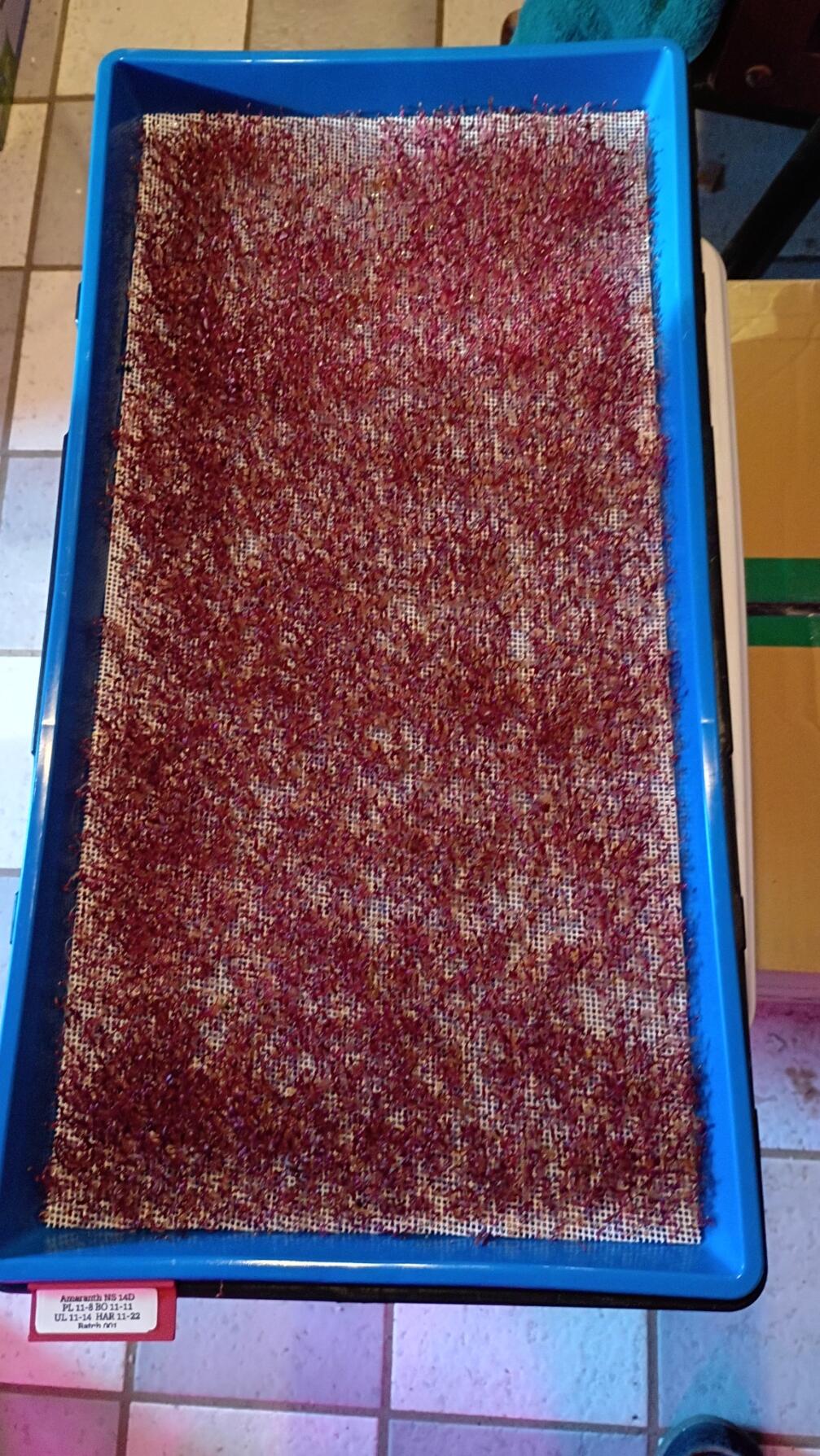
| Delicate growers (need more attention) | Red garnet amaranth | Magenta color, earthy flavor |
| Semi-tricky crops (worth learning) | Swiss chard | Colorful stems, mild flavor |
| Semi-tricky crops | Basil | Aromatic, great in Italian dishes |
| Semi-tricky crops | Cilantro | Essential for Mexican and Asian cooking |


From Kitchen Counter to Commercial Setup
The book scales with you. These are the starting points it covers:
Home Growers
- Starting with a minimal investment
- Growing on windowsills, counters, or small shelving units
- Choosing varieties your family will eat
- Storing and using microgreens in everyday meals
Small-Scale Sellers
- Setting up a modest grow operation
- Selling at farmers markets
- Direct-to-consumer models
- Pricing for profit while staying competitive
Commercial Growers
- Professional setups (see our professional grow rack setup guide for an updated build)
- Working with chefs and restaurants (more in our best microgreens for restaurants guide)
- Distributor relationships
- Cottage food laws and business legalities
- Scaling production efficiently
What's Inside the 196 Pages
Section 1: Microgreens Fundamentals
- What microgreens are and how they differ from sprouts and baby greens (see our sprouts vs. microgreens guide)
- How microgreens are used: culinary, nutritional, and commercial
- Cost analysis for home and commercial setups
- Growth stages from seed to germination to cotyledons to true leaves, and why harvest timing matters
Section 2: Essential Growing Knowledge
- Lighting: natural vs. artificial, data from our lighting experiments, and light duration, intensity, and spectrum
- Trays: standard 10x20 trays and other sizes, plus Bootstrap Farmer trays and tray clips (see our 10x20 trays guide)
- Growing mediums: coco coir vs. soil vs. hydroponic systems vs. reusable grow mediums, with pros and cons
- Nutrients: hydroponic nutrients vs. soil additives, organic vs. non-organic, our mixing ratios (including Ocean Solution 2-0-3), and how to pH balance your water
Section 3: The Core Growing Process
- Bottom-watering, top-watering, how much and when, and preventing overwatering and damping off
- Growing schedules for continuous harvests at home or commercially
- Seed soaking: which seeds benefit, soak times, and seeds that should not be soaked
Section 4: Troubleshooting
- Damping off, crops lying over (see our weight to blackout guide), overwatering, and poor germination
- Sticky (mucilaginous) seeds, small cotyledons, and lanky growth
- Root hairs vs. mold, with clear images, so you don't toss healthy trays (our complete mold guide goes deeper)

Section 5: Harvest, Storage, and Sanitation
- Harvesting: knife vs. scissors, why sharp tools matter, how to sharpen, and our exact method (see our harvesting guide)
- What to do with leftover roots and medium (see what to do with used grow medium)
- Sanitizing equipment, preventing cross-contamination, and UV options (see our cleaning and sanitizing guide)
- Storage: washing vs. not washing, containers, moisture control, and shelf life by variety (see how to store microgreens)
- Recording grow data: what to track and how to use it to improve
Section 6: Commercial Growing and Business
- Setup budgets at roughly the $100, $300, and $1,500 levels, and ways to cut costs
- Growing indoors vs. outdoors
- Selling: farmers markets, direct to consumer, chefs and restaurants, distributors and grocery stores
- Cottage food law, food safety, branding, and marketing basics
Section 7: Tips, Tricks, and Advanced Techniques
- Growing tips: airflow, seed clingers, red-stemmed sunflowers, heat mats, organic certification, cold treatment, and removing sunflower hulls
- Equipment hacks: a DIY tamping device, webcam monitoring, misting tools, working with bulk hydroponic mats, a blackout dome, an $8 Dollar Tree setup, a seed shaker, and automatic watering
- Advanced experiments: music, positive encouragement, color boosting with lights, and dehydrating microgreens
- Seed sourcing: where to buy (we recommend True Leaf Market), bulk vs. small batches, storing seed, and why we do not recommend bird seed (see our seed quality guide and seed hub)
- Business and branding basics
Section 8: Bonus Content
- Original recipes: Sunflower Microgreen ABJ Sandwich, Easy Peasy Microgreen Breakfast Croissant Roll, Spicy Sweet Potato Soup with Pea and Amaranth Microgreens, Microgreen Potatoes Colcannon, Microgreen Cornbread with Microgreen Honey Butter, a Greens, Egg, and Ham Appetizer, Floral Chocolate Cupcakes with Edible Marigold Microgreens, and a Microgreen Carrot Cake with Micro-Cream Cheese Filling. We created, photographed, and taste-tested every recipe, with help from our family.
- Resources: where to buy seeds, trays, nutrients, and mediums, plus branding and legal resources and the scientific studies referenced
- Reference materials: a glossary, an index, a tray-specific seeding guide, a nutrient ratio cheat sheet, and a quick "how to grow" reference sheet
Why a Physical Book?
In an age of digital everything, a printed copy still earns its spot at the grow station.
- No screens to splash, no dead batteries, and no glare under grow lights
- Flip straight to the page you need, even with dirty hands
- Full-color images for side-by-side comparison while you work with trays
- No internet needed, and easy to share with family, friends, or employees
Choose Your Format

| Format | Best for | Details |
|---|---|---|
| Paperback (7" x 10") | Everyday use at the grow station | Lightweight and durable, with full-color images across all 196 pages |
| Hardcover (7" x 10") | A lasting reference or a gift | Enhanced paper quality and premium construction, same content and full-color images |
| PDF eBook | Instant access, international buyers | Download, read on any device, searchable, and includes digital bonuses |
| Amazon Kindle | Reading on Kindle devices and apps | Adjustable text size, notes and highlights, syncs across devices |
Many growers choose both, with the print copy at the grow station and the digital copy on their phone. The paperback and hardcover have identical content. The digital version has the same core content plus some digital-only bonuses.

Who Should Read This Book?
Home Growers
You want fresh greens for your family year-round, more control over what goes into your food, and greens you can add to every meal.
Aspiring Business Owners
You want to understand the fundamentals before investing heavily, learn from growers who sell, and avoid common beginner mistakes.
Commercial Growers
You want to troubleshoot persistent issues, tighten your growing schedule, and pick up efficiency tips.
Beginners to Veterans
Beginners get clear step-by-step guidance, and experienced growers can pick up techniques and efficiency improvements.

Important Note: Reusable Grow Mediums
We wrote and published "Becoming a Microgreen Master" in 2021, before we extensively tested reusable grow mediums. That means:
- The book has limited information on growing with reusable mediums
- Most growing instructions focus on coco coir and soil
- The principles and fundamentals still apply, but specific techniques differ
For guidance on our reusable silicone grow medium, see:
- Our reusable silicone grow medium launch blog and reusable grow medium guide
- Our seed compatibility guide. Note that Swiss chard, beets, and cilantro are not recommended on silicone, so grow those on soil or coco coir, as the book describes.
- Our Video Library for our latest videos
The book is still valuable for fundamentals, crop-specific growing, troubleshooting, and business strategy, which apply on any medium.
Pair the Book with Our Microgreen Masterclass
The book gives you a foundation. For the latest techniques and video instruction, our Microgreen Masterclass is our most up-to-date training, including:
- Video lessons showing each technique step by step
- Methods we've developed since publishing the book in 2021
- Reusable silicone grow medium techniques
- Updated equipment recommendations
Curious what's covered? Our full course breakdown walks through all 11 modules and 60+ lessons before you enroll. Together, the book and the Masterclass cover both the timeless fundamentals and our newest methods.

Keep Your Own Grow Records
The book's grow data section explains why tracking matters. To put that into practice, Microgreen Tracker, our grow-tracking web app, lets you log each tray with its seed, sow date, and harvest date, and see your harvest window for each crop. You can start a free 7-day trial to see if it fits your setup.

Additional Resources from On The Grow
Our Recipe Cookbook
Looking for more ways to use your microgreens? Our separate cookbook, "36 Easy & Unique Microgreen Recipes", has 36 recipes covering main dishes, sides, and desserts, created, photographed, and taste-tested by us. It's available in paperback and eBook and pairs well with the book. For more ideas, see our recipe hub.

Free Educational Resources
- Free Microgreen Troubleshooting Guide PDF
- Free Tray-Specific Seeding Guide PDF
- Free Ultimate Tray and Kit Guide PDF
- Free Fertilizer Ratio Guide PDF
- Frequently Asked Questions
- Learn hub and our microgreens blog
Shop the Gear
What You Get from the Book
This book holds years of experiments, failed crops, and lessons learned, so you can skip some of the trial and error we went through. It gives you:
- One organized reference in place of a lot of scattered research
- Clear guidance on what we've found works and what we've found is marketing hype
- Step-by-step help with the common mistakes that trip up new growers
Frequently Asked Questions
Is this book good for complete beginners?
Yes. We start with the very basics and build from there. If you want a free starting point first, see our beginner's guide to growing microgreens.
Will this book help me start a microgreens business?
It covers the business side, including farmers markets, selling to chefs, pricing, and legalities, but the focus is on growing microgreens well first. For a deeper business dive, see our guide to selling microgreens, our selling hub, or the Masterclass.
Is the digital version the same as the physical book?
The digital version has the same core content plus some digital-only bonuses. Many growers prefer the physical book in the grow room.
Why doesn't the book cover reusable grow mediums extensively?
We published it in 2021, before we extensively tested the reusable silicone grow medium. For those methods, see our silicone medium blog, our Video Library, or the Masterclass.
Do I need to buy other resources too?
No. The book is comprehensive enough to get you growing. Pairing it with our free resources, blog posts, or the Masterclass gives you more depth.
What if I've already watched all your YouTube videos?
The book consolidates years of video content into one organized reference, includes data and charts that aren't in the videos, and has detailed crop guides. Many of our viewers still like having it in one place.
Can I return the book if I don't like it?
Physical books bought through our website follow our standard return policy. eBooks are non-refundable because they are a digital product.
Ready to Become a Microgreen Master?
Whether you're growing your first tray or tuning a commercial operation, "Becoming a Microgreen Master" is our complete reference for growing microgreens well. Grab your copy and start growing with confidence.
Happy growing!
Related Blogs You Might Enjoy
- How to Grow Your Own Food Indoors: The Best Way to Learn Microgreens
- Inside the Microgreen Masterclass: A Full Module Breakdown
- How to Grow Microgreens: Complete Step-by-Step Guide
- How to Start Growing Microgreens: Beginner's Guide
- How to Grow Broccoli Microgreens
- How to Grow Sunflower Microgreens: Complete Step-by-Step Guide
- How to Grow Pea Microgreens (Pea Shoots): A Complete Guide
- How to Grow Radish Microgreens: The Fastest Beginner Crop
- How to Grow Microgreens in 10x20 Trays
- Complete Microgreen Lighting Guide
- How to Water Microgreens: The Complete Watering Guide
- Why Are My Microgreens Moldy? Mold vs. Root Hairs
- Top Microgreen Growing Mistakes and How to Avoid Them
- Meet Our Reusable Silicone Grow Medium
- Sprouts vs. Microgreens: Key Differences
- Weight to Blackout Transition Guide
- How to Sell Microgreens: Pricing, Permits, and Starting a Business
- Best Microgreen Growing Advice and Resources
This post contains affiliate links, including links to Amazon and True Leaf Market. On The Grow may earn a small commission on qualifying purchases at no additional cost to you. We only recommend products we use and trust. For details, see our Affiliate Disclosure.
The book and this post draw on our own first-hand testing in our own grow space. Results vary with your environment, seed, equipment, and methods, so we encourage you to run your own tests. Setup budgets and business topics are examples for general education, and they are not a promise of income or profit. Check your local and state rules before selling food. This post is for general education and is not medical advice. Nutrition information varies by variety and growing conditions. Microgreen Tracker accounts, subscriptions, billing, and support are handled at microgreentracker.com, not onthegrow.net.
Published: January 30, 2026
Original publication: May 2021
Updated: November 14, 2026
All content is property of On The Grow®, LLC