
Silicone Reusable Microgreen Grow Medium - Complete Grow Medium Overview
A reusable grow medium, as the name suggests, is a medium that can be used multiple times for growing plants. This approach is not only cost-effective but also can be more environmentally friendly. It greatly reduces the need for single-use grow mediums like soil or coco coir, or even other hydroponic grow mats, which often come wrapped in plastic and require large quantities for each microgreen grow.
You could compost your coco coir or soil after growing microgreens on it and reuse it again, but the sterilization and composting process can be quite tedious when compared to simply cleaning and sanitizing a reusable medium and starting again. Our guide to what to do with used grow medium after harvest covers the composting side in detail. Not to mention, if you don't sterilize the reused compost or coco coir properly, you risk the potential for pathogens that could take over your crops.
What these reusable grow mediums do is act as a lattice for the plant seeds to sit on top of, and eventually act as an anchor for the root structures that develop from the plants. If you've been a fan of our stainless steel reusable grow medium, you may find yourself loving our newer product, the reusable silicone grow medium. In this blog we'll cover our reusable silicone grow medium in depth, starting with costs and environmental impact.
Initial Investment vs. Long-Term Savings
|
Cost Factor |
Reusable Grow Medium (10-pack) |
Coco Coir Brick (1.4lb) |
|
Initial Cost (avg.) |
$54.97 |
$3.80 |
|
Durability / Usability |
Reusable for 20 to 30+ grow cycles with proper care |
Single use per portion |
|
Yield per Unit |
10 sheets (each equals a 1020 tray) |
7 1020 trays per brick (6 cups each) |
|
Cost per Tray |
$5.50 per tray (initially) |
$0.54 per tray |
|
Cost per Tray per Cycle |
$0.275 per tray (if used for 20 cycles) |
Not applicable. Single-use medium. |
|
Long-Term Cost Efficiency |
More cost-efficient over many cycles |
Less cost-efficient, requires continuous purchase |
|
Env. Impact |
Less waste due to reusability |
More waste due to consumable nature |
Notes:
- The cost per tray per cycle assumes each sheet is used for 20 or 30 cycles using 10x20 trays and 10x20 silicone. Current 10-pack pricing is $54.97.
- At roughly $0.54 per tray for coco coir, a silicone sheet covers its own cost somewhere around the tenth grow, and everything after that is savings.
- The coco coir brick, being a consumable, does not have a cost per cycle as each portion is used once, then composted after harvest.
- The cost and amount used for coco coir in this table is based on using 1-inch deep 10x20 sized trays with 6 cups per tray and a single 1.4lb brick from one brand. We no longer carry coco coir, but the one we use is available here.
- The long-term cost efficiency and environmental impact are based on the assumption of frequent and long-term use.
- Coco coir pricing and yield assumptions are based on one specific brand and fill depth. Actual cost per tray will vary depending on the brand purchased and how deeply trays are filled.

A quick note on hemp and jute mats, since these come up often as alternatives. Hemp mats run around $2 per 10x20 sheet (roughly $19.95 for a 10-pack on Amazon) and jute is similar at around $2.95 per sheet ($29.45 for a 10-pack). Both are biodegradable, compostable, and for some people they can have a gentler learning curve than silicone since they hold moisture more like soil does. The trade-off is they're still single-use, they tend to dry out faster than soil, and from personal experience, they aren't always consistent. Over the course of 20 to 30 grows, you're looking at roughly $40 to $90 in hemp or jute mats versus a single silicone sheet at around $5.50 that doesn't get thrown away after every harvest. If you want the easiest possible learning curve and don't mind the recurring cost, hemp or jute can be a solid choice for some people. If you want to invest once and reuse for 18 to 24 months, silicone is where the long-term math works out.
Environmental Impact
The most straightforward environmental benefit of a reusable grow medium is simple. One medium replacing 20 to 30+ single-use grows worth of soil or coco coir means significantly less waste accumulating over time. That's the core of it.
We want to be honest about the full picture though, because we think you deserve a straight answer rather than a polished one.
Silicone is not biodegradable in any practical sense. It won't break down naturally in a landfill, and it's not accepted in standard curbside recycling programs anywhere in the US. When your medium eventually reaches the end of its life, we recommend checking whether a specialized silicone recycling program is available in your area. Because our medium contains a fiberglass core, it is a mixed-material product and may not be accepted by programs that require 100% silicone. If recycling isn't accessible to you, food-grade silicone can be safely disposed of in regular household trash. It is classified as non-hazardous waste and releases far fewer and less harmful byproducts in a landfill compared to many conventional plastics.
On the microplastics question: silicone does not break down into conventional petroleum-based microplastics. However, recent research does show that silicone can shed its own micro-particles under mechanical stress or high heat conditions. For a grow medium sitting in ambient conditions with water and seeds, that risk is extremely low, but we won't claim the science says zero, because it doesn't.
No material has a perfectly clean end-of-life story, including ours. Bagged potting soil is packaged in polyethylene-based plastic that is technically recyclable but in practice almost never is. Soil contamination makes the bags unacceptable to most recycling facilities and the vast majority end up in landfill. Many coco coir bricks are sold wrapped in similar plastic film and face the same challenges, though unlike bagged soil, some coir bricks are available without plastic packaging at all. One silicone medium replacing 20 to 30+ grows worth of single-use packaging is a meaningful reduction in total waste over time. That's where silicone's real environmental advantage lives, in durability and reusability, not in being a perfect material.

PFAS and Food-Grade Silicone
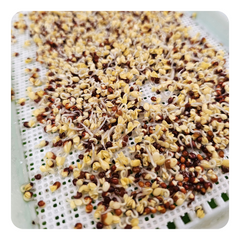
Food-grade silicone, widely used in kitchenware and containers, is generally considered safe and does not contain per- and polyfluoroalkyl substances (PFAS). PFAS are a group of man-made chemicals that include PFOA, PFOS, GenX, and many other chemicals. These substances are known for their use in various industrial applications and consumer products for their water and oil repellency properties.
Silicone, a synthetic elastomer built on a silicon-oxygen backbone, is chemically distinct from both conventional plastics and PFAS. It's valued for its high heat resistance and stability, and is widely considered a safer choice for food contact applications, particularly in conditions involving water rather than high heat or fatty foods, where the research shows negligible migration.
What about microplastics? Silicone and microplastics are not the same thing. Microplastics come from the breakdown of traditional plastic materials. Silicone is chemically different and significantly more stable, which is why it's used in medical implants, baby products, and culinary applications like baking molds and kitchen utensils. Our grow medium is used in ambient conditions with water and seeds, not under prolonged high heat or with fatty foods, which is where most silicone particle-release research has been focused.
A note on silicone safety in water contact conditions
One of the most common concerns people raise about silicone is whether it can leach anything into the food growing on it. Here's what the peer-reviewed research actually shows: the bulk of documented silicone migration concerns involve high heat or fatty foods. Fat content alone, even at moderate temperatures, can increase siloxane migration in cooking applications. These conditions are completely absent in hydroponic growing. Studies have consistently found that room-temperature water contact with food-grade silicone produces negligible migration. One study (Zhang et al., 2012, Food Additives & Contaminants) found no detectable siloxanes in milk or infant formula after 6 hours of direct contact at 40°C, and our medium sits in water at room temperature, which is an even lower-risk scenario.
The silicone particle release concerns you may have read about also arise primarily in high-heat cooking and mechanical abrasion conditions, not in ambient water contact. This is why we recommend hand washing only, no brushes or abrasive scrubbers, to preserve the surface integrity of the medium.
None of this is a blanket guarantee, and we want to be honest. Using silicone as a direct plant-growing surface is a relatively new application, and long-term peer-reviewed studies specific to this use case don't yet exist. What we can say is that the material itself has one of the longest food-contact safety track records of any synthetic material. Silicone has been used in medical implants since the 1950s, in FDA-recognized food-contact applications since 1977, and in consumer kitchenware since the 1990s. The conditions of growing microgreens on it with room-temperature water represent the most favorable scenario in the safety literature.
The Reusable Silicone Grow Medium
Our reusable silicone grow medium is a step up for most people from our previous stainless steel version, offering several advantages.
Key Features of our 1.2mm reusable medium:
- Material: Made from virgin, food-grade silicone, platinum-cured
- Fiberglass Core: for added structural strength
- Expected Lifespan: With proper care and cleaning, most users can expect 18 to 24 months (or 20 to 30+ grows) before needing replacement. Heavy commercial use may require more frequent replacement.
- Temperature Resistance: Safe from -40°F to 450°F (-40°C to 232°C), suitable for boiling water sterilization
- BPA-Free: Made from non-toxic, BPA-free materials safe for food contact
- Hole Size: 1.2mm, suitable for most microgreen seeds
- Sizes: Sized at the factory in 10x20, 10x10, 7x14, and large and small sprouting tray sizes. Order the size that matches your tray rather than trimming one down
- Packs: each size option comes in 2-pack or 10-pack
- Additional: 1.2mm standard silicone is third-party tested for compliance with both FDA standards and LFGB, the German food-contact safety standard recognized across the European Union and considered one of the strictest food safety frameworks in the world.

What does platinum-cured mean?
Platinum-cured refers to the manufacturing process used to solidify liquid silicone into its final form. There are two main curing methods used in silicone production, platinum-cured and peroxide-cured.
Peroxide-cured silicone uses organic peroxides as the curing agent instead. It's a cheaper process but can leave behind trace residues that require an additional bake-out step to remove, and it's generally considered lower quality for food-contact applications.
For a grow medium that your food is literally growing on, platinum-cured matters. It means the silicone is more inert, more stable over time, and less likely to off-gas or degrade, which is exactly what you want in something that's in direct contact with the food you're eating.
What does LFGB Tested & Compliant mean?
LFGB stands for Lebensmittel-, Bedarfsgegenstände- und Futtermittelgesetzbuch, the German food and consumer goods safety code. It is widely considered one of the strictest food contact material standards in the world, often regarded as more rigorous than FDA standards because it requires testing for both chemical migration and sensory effects (taste and odor transfer to food). LFGB compliance is recognized across the European Union and is commonly required for food-contact products sold in Germany and surrounding markets.
Our 1.2mm standard reusable silicone grow medium is third-party tested and confirmed compliant with LFGB standards. This applies only to our 1.2mm version. Our 1.7mm large hole variant is sourced from a separate manufacturer and does not carry the same testing, so we don't apply this language to that product.
We also offer a silicone medium with slightly larger holes for larger seed varieties
Please note that our 1.7mm large hole version is produced by a different manufacturer than our 1.2mm standard. The FDA compliance language and LFGB testing referenced above apply specifically to the 1.2mm standard medium that comes in 10x20, 10x10, 7x14, large sprouting tray, and small sprouting tray sizes, and should not be assumed for the 1.7mm variant.
- Material: Made from food-grade silicone
- Durability: Lasts 15 to 30+ grow cycles with proper care
- Hole Size: 1.7mm, suitable for large seed varieties such as sunflower, peas, wheatgrass, radish, and melon
- Sizes: Sized at the factory in 10x20 and 10x10 tray sizes
-
Packs: each size option comes in 2-pack or 10-pack
Available here: Click or tap

Advantages Over the Stainless Steel Medium
Our stainless steel medium was well-received, but it had some limitations, such as difficulty in reshaping and sharp edges. The silicone version addresses these issues with its flexibility and user-friendly design, and it's what we recommend today. Worth noting for anyone who saw our older videos: our stainless steel is 316 grade, which we introduced to this market. The 304 grade shown in some early footage was not our product. Stainless is being phased out on our end, so we no longer recommend it as a primary option. The full story lives in our stainless steel grow medium guide and why we transitioned to silicone.
Pros:
- Easy to handle
- Simple to flatten and set up
- Excellent seeding visibility
- Easy to clean and sanitize for reuse
- Effective for most microgreen seeds
- Covers its cost after roughly ten grows compared to buying coco coir each time
- Keeps grow space cleaner from soil and coco coir debris
Cons:
- Higher initial investment compared to soil
- Moisture retention can be challenging at first
- Requires fertilizer, since the medium is completely inert
- Very small seeds may fall through the mesh, though some varieties like amaranth can be grown successfully using the heat mat method (see seed compatibility section below)
- Can develop stains with some seed varieties like alfalfa
- Not permanent. Plan on replacing sheets after 20 to 30+ cycles
A Note on the Learning Curve
The biggest adjustment when switching to silicone from soil or coco coir is water management. Soil and coco coir hold moisture like a sponge, which gives you a buffer. Silicone doesn't work that way. Water either sits in the reservoir tray below or it doesn't, so you have to develop an eye for reading your crops and your tray. The good news is that once it clicks, it's actually really intuitive. Our complete watering guide covers the volumes and timing in detail.
Your misting device matters too. A quality hand pump sprayer gives you much more control over moisture during germination than a trigger-style bottle. And one thing that catches a lot of new growers off guard: don't point a fan directly at your trays during germination. It will dry out your seeds faster than you'd expect and tank your germination rates. Save the airflow for after your crops are up and in the light.

Is the silicone medium right for everyone?
Most of our customers love growing with the reusable silicone grow medium. We even have growers who use them exclusively for market production, growing their most popular varieties like broccoli, radish, and kale tray after tray. We've personally been growing on them for over four years and they're our preferred method, hands down.
That said, they aren't for everyone, and we want to be upfront about that. Compared to soil or coco coir, reusable mediums take more time to dial in for some people. The watering is different, the setup feels different, and your environment plays a big role in how things go. We have a lot of resources to help you get there (videos, guides, and this blog), but we can't guarantee they'll work perfectly for every grower in every setup, because so much comes down to the individual and their growing environment.
Our honest recommendation: start with a 2-pack and test them out in your space before committing to a 10-pack or more. Get one or two successful grows under your belt first. If they click for you the way they clicked for us, you'll never look back. And if you find they're not your style, you'll have learned that without a big investment. Please note that we do not accept returns on used grow mediums.
Usage and Maintenance
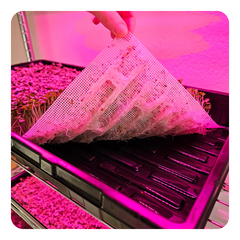
Using the reusable silicone grow medium is straightforward, and lower in this blog we have video resources linked to guide you on how to grow microgreens with it.
Regarding the cleaning and sanitation process, after you've removed all the roots from the medium, there are several methods you can employ. Begin by hand washing the silicone with a combination of mild, food-safe dish soap and lukewarm to hot water, using your hands to gently lather and rinse. Alternatively, create a cleaning paste using a mixture of 1/4 cup baking soda and warm water. Submerge the silicone in this paste for about 5 minutes, then rinse thoroughly. This also helps with stain removal.
One thing we do not do: we no longer recommend putting the reusable silicone grow medium in the dishwasher. Hand washing plus the deep sanitizing steps below is the method we stand behind.
For additional sanitation, consider the following natural and silicone-friendly options:
OPTION 1
Our Recommended Method
Start by removing all roots and plant material from the medium using our Microgreen Medium Scraper/Cleaner or your hands. Once the medium is clear of debris, follow these steps:
Fill a sink with hot water and mild, food-safe dish soap and let the silicone soak for approximately 20 minutes. Use your hands to gently lather and rinse. Do not use brushes or abrasive scrubbers, as these can create tiny cuts in the silicone surface where bacteria can accumulate.
Boil the silicone in water for 2 minutes. Safety Warning: Use tongs or heat-resistant gloves to handle hot silicone. Never touch boiling silicone with bare hands. Allow to cool completely before handling.
Spray or soak the silicone with standard 3% hydrogen peroxide (the kind found in the brown bottle at any drugstore or pharmacy) for 10 to 20 minutes.
💡 Pro Tip: Clean your mediums immediately after harvest while roots are still fresh. Letting root mats dry onto the surface makes cleanup significantly harder. We clean ours the same day we harvest, every time.
💡 Pro Tip: Cleaning multiple mediums in a batch is much faster than doing them one at a time.
A Note on the "Up to 24 Hours" H₂O₂ Soak. Some sources suggest extended hydrogen peroxide soaks for silicone. We recommend keeping contact time to 10 to 20 minutes. Prolonged or high-concentration exposure to H₂O₂ can gradually degrade the silicone surface over time, which is the opposite of what we want. Stick to 3% concentration and 10 to 20 minutes for the best results long-term.
WATCH FULL VIDEO HERE ON OUR CLEANING PROCESS

OPTION 2
- Hand wash the medium with warm water and mild dish soap.
- Add the medium(s) to a bucket and fill with just enough water to cover the mediums.
- Place the bucket in a spare room and use an ozone machine, following the manufacturer's directions to sanitize the medium.
⚠️ Safety Note: Ozone is FDA-recognized as safe for food contact surfaces, but ozone generators should only be used in unoccupied spaces. Keep the room closed during treatment and ventilate it thoroughly before re-entering. Do not use this method in any space where people or pets are present.
You can see this method at the end of this video here:
First Use
Before using your silicone medium for the first time, give it a quick boil for 2 minutes or a 10 to 20 minute hydrogen peroxide soak. This removes any manufacturing residues from production and storage and gives you a clean starting point.
When to Replace
While this medium is reusable, it eventually will have to be replaced, and the frequency really depends on how you take care of the medium. Plan on 20 to 30+ grow cycles, or roughly 18 to 24 months at two to four grows a month. Heavy commercial use will shorten that. Here are the signs to watch for.
Replace your reusable silicone grow medium when you notice any of the following:
- Physical Damage: Look for tears, deep cuts, or significant wear that could compromise its integrity.
- Loss of Flexibility: Silicone that becomes stiff or loses its flexibility can affect performance.
- Surface Degradation: If the surface becomes sticky, discolored, or begins to degrade, it's no longer suitable for use.
- Exposed Fiberglass Core: If you notice tears or deep cuts that reveal the inner fiberglass reinforcement, replace the medium immediately. This is also why we don't recommend cutting or trimming the medium to fit a different tray. Order the size that matches your tray instead.
Troubleshooting Common Issues
Odor buildup: Soak in a 1:1 white vinegar and water solution for 30 minutes, rinse well, then follow with a hydrogen peroxide soak if the odor persists. A 2-minute boil as a final step usually resolves it completely.
Hard water mineral deposits: If you notice a cloudy or filmy appearance on the medium, soak in white vinegar for up to an hour, then rinse thoroughly. Using filtered water for your final rinse after cleaning can help reduce buildup over time.
Staining: Some seed varieties like alfalfa can cause natural discoloration on the silicone surface. This is cosmetic only and does not affect performance or food safety. A baking soda paste (1/4 cup baking soda mixed with warm water, soaked for 5 minutes) can help lighten stains if desired.
Common Grow Mistakes on Silicone (and How to Avoid Them)
The vast majority of failed grows on silicone trace back to the same handful of issues. Here's what to watch for. For an even deeper dive into common errors across all grow methods, check out our top microgreen growing mistakes blog.
Skipping the pre-mist before seeding. If you spread seeds onto a dry medium, they bounce, roll, and pile unevenly. Always mist the silicone lightly first so seeds stick where you place them. This is very helpful when you are seeding very small seeds, like amaranth (which can be grown on the medium with the use of a seedling heat mat, by the way).
Pooling water on the surface. Silicone doesn't absorb water like soil does, so any water that pools on top of the medium during seeding or germination can cause seed rot in those spots. If you see standing water anywhere, wick it up immediately with a paper towel or cloth.
An unlevel tray. This is one of the sneakiest issues. If your shelf or counter is even slightly off level, water will collect on the low side and dry out the high side, giving you uneven germination. Check your setup with a level if you're seeing patchy results.
Pointing a fan at germinating trays. Airflow is great once your crops are up and in the light, but during germination a direct fan dries seeds out faster than you'd expect and tanks your germination rate. Save the airflow for after blackout.
Too much time in blackout. Silicone doesn't hold moisture the way soil does, so a tray sitting in blackout too long without being misted can dry out or stretch the crops too tall and leggy. Watch your trays daily once germination starts and move to light when they're ready, not on a strict schedule. For more on this, see our blog on when to transition from weight to blackout.
Using a trigger sprayer instead of a hand pump sprayer. Trigger bottles deliver inconsistent pressure and tend to blast seeds around. A quality hand pump sprayer gives you a finer, more even mist and much better control.
Watering from the top once roots are established. Once your crops are out of germination and into the light, all watering should happen in the reservoir below, not on top of the medium. Top watering at this stage encourages mold and disturbs the canopy.
Forgetting nutrients. Silicone is completely inert, so plain water grows will always trail behind nutrient-fed grows. If your harvests feel thin or pale, this is usually the reason, right behind lighting issues. Our complete lighting guide covers that side of things in depth, and our guide to why microgreens stay short works through the rest of the usual causes.
Harvesting Microgreens
Harvesting is simple and can be done by gently pulling the microgreens by hand, roots and all, or using a harvest knife. The one we use is the Mercer Culinary Millennia Wide Bread Knife, and the scale and produce bags we pair with it are in our Harvesting Tools We Use list. Be careful not to nick the silicone during the process. For a deeper look at different harvest methods, see our microgreen harvest comparison blog.
How it Arrives to You
Typically, when you order our reusable silicone grow medium from our shop, it will arrive rolled up and tied with a simple bow, unless you order 1020 trays with your order. In that case, it arrives flat packed. Luckily, with the silicone, as previously mentioned, unrolling the medium is quick and easy.
How to Grow Microgreens Using Our Reusable Silicone Grow Medium
Step 1: Set Up Your Tray
Place your mesh tray on top of your no-holed tray. This two-tray system is what allows you to bottom-water effectively while keeping your medium elevated above the reservoir. If you're using a 2-inch deep no-holed tray with inner ridges, you can place the reusable medium directly into that tray instead.
Step 2: Prepare the Medium
Lay your silicone medium flat across the mesh tray so it covers the full growing surface evenly. Before seeding, lightly mist the medium with water. This does two things. It prevents seeds from bouncing when you spread them, and it starts the hydration process that helps with germination. The medium should be damp but not pooling with water.
Step 3: Seed Evenly
Distribute your seeds across the medium, avoiding clumps or dense patches. Unsure how much seed to use? Check our free tray-specific seeding guide for exact amounts by variety. After spreading, mist the seeds for about 5 to 10 seconds with a hand pump sprayer. Seeds should be moist and in good contact with the medium. If you see water pooling anywhere, wick it up immediately with a cloth or paper towel. Pooling water in those spots can cause seed rot.
Step 4: Cover and Weight
Cover your tray with a no-holed tray placed on top to create a dark, humid environment for germination. Place a 3 to 7 lb weight on top of the cover tray. The weight ensures good seed-to-medium contact and helps with seed hull removal, which is especially important for crops like sunflower.
Step 5: Germination Phase
Place your tray setup on a dark shelf. For the next 2 to 4 days (depending on the variety), mist twice daily, once in the morning and once in the evening. Too much water during this phase can cause seeds to rot. Too little will result in poor germination. You're looking for consistent moisture, not a soaked medium.
Step 6: Transition to Blackout
Check your tray after a few days. When you see more yellow seedlings than dark seeds, germination is well underway and it's time to move to the blackout phase. Remove the top tray and weight, give everything a good misting, and check that roots are beginning to reach downward. Flip the cover tray upside down to create a dome above the seedlings, and return to your dark shelf. This allows plants to stretch slightly while maintaining some humidity. If your crops are already tall enough and pushing strongly against the cover, you can skip this step and move straight to light.
Step 7: Expose to Light and Begin Bottom-Watering
After about one day in the blackout dome, or when seedlings are 1 to 2 inches tall, it's time to move them to light and begin bottom-watering. Since the silicone medium has no nutritional value on its own, we highly recommend adding nutrients to your water at this stage. Our go-to is Ocean Solution 2-0-3 at 0.5 oz per gallon, pH balanced to the 5.5 to 6.0 range. We no longer carry it, so that link points to where we buy it now. For full ratios and pH guidance, see our free fertilizer ratio guide and our best fertilizers and nutrients guide.
Here's how to water based on your setup:
Standard 1-inch shallow trays: Start with 1/4 cup of nutrient water about twice a day when plants are young. As your crops grow and develop larger root systems, gradually increase up to 2 cups per watering. Always check that the previous water has been consumed before adding more. If it hasn't, just add a splash to cover any dry areas.
Single 2-inch deep tray: Add 2 cups of nutrient water beneath the roots twice a day. Pour into an empty corner of the tray, not directly onto the crops.
Kratky setup (2-inch deep tray as reservoir): Add 14 cups of nutrient water to start. The water level naturally drops as plants consume it, creating an air gap that provides oxygen to the roots. Only refill if the water level drops below the bottom of the roots. For more on this method, see our complete Kratky method guide.
Step 8: Harvest
Most varieties are ready in 7 to 14 days. You'll know they're ready when they've developed their first true leaves and reached 1.5 to 3 inches in height. Harvest by gently pulling the microgreens by hand, roots and all, or use a harvest knife. Just be careful not to nick the silicone medium.
After harvest, remove all remaining roots and stems from the medium. These can be composted or fed to livestock. Then clean and sanitize your medium before the next grow. See our full cleaning instructions in the Usage and Maintenance section above, or read our complete cleaning and sanitizing guide.
Which Seeds Do and Do Not Work with the Reusable Grow Mediums
Let's explore how to cultivate microgreens using our reusable silicone grow medium, but first, it's important to understand which seeds are compatible with this medium, as this is a frequently asked question. For an even fuller breakdown, check out our dedicated seed compatibility guide, and our overview of the types of microgreens if you're still choosing what to grow.
Compatible Seeds
Microgreen seed varieties that work well with reusable grow mediums.
Through hands-on testing, we've found that medium to larger seeds with manageable root systems perform best on reusable grow mediums. These include a wide range of brassicas, herbs, and salad greens.
Broccoli varieties: Waltham 29, Di Cicco, Purple Sprouting, Calabrese Green, Ramoso Santana (read our blog on how to grow broccoli microgreens)
Radish varieties: Rambo, Daikon Minowase, China Rose, Triton Purple, Sango Purple, Red Arrow, Purple Plum, Hong Vit, Purple, Colorful Radish, Confetti Mix (see our radish microgreens guide)
Kale varieties: Red Russian, Vates Blue Scotch Curled, Black Tuscan (Lacinato), Dwarf Siberian, White Russian, Bright Green Curly, Purple Reign, KX-1, Unicorn, Kalefetti Mix, Red Kale
Cabbage & Pak Choi varieties: Red Acre, Mammoth Red Rock, Golden Acre, Glory of Enkhuizen, Pak Choi White Stem, Red Pak Choi (see our red cabbage guide)
Mustard & Asian greens: Spicy Oriental, Mizuna, Mizuna Red, Tatsoi, Red Tatsoi, Komatsuna (Spinach Mustard), Mizuna Red Kingdom
Other brassicas: Kohlrabi Purple Vienna, Kohlrabi Early White Vienna, Brussels Sprouts Long Island Improved, Turnip Purple Top White Globe, Rutabaga American Purple Top, Collards Vates, Cauliflower Snowball Y Improved, Cauliflower Igloo
Basil varieties: Genovese, Italian Large Leaf, Dark Opal, Bicolor, Colorful Basil Mix, Lemon Basil
Additional compatible varieties: Arugula Slow Bolt, Arugula Astro, Curled Cress, Fenugreek, Purslane, Red Gruner, Chia, Red Clover, Crimson Clover
Seed mixes: Basic Salad Mix, Spicy Salad Mix, Mild Micro Mix, Superfood Mix
Sunflower: Black Oil Sunflower (see our sunflower microgreens guide)
Seeds That Require Special Consideration
Best grown without a medium (mesh tray only).
Pea varieties have aggressive root systems that tend to tangle deeply into reusable grow mediums, making removal difficult. These varieties perform best when grown directly on a mesh tray without any medium. For our full pea growing walkthrough, see our pea microgreens cornerstone guide, and the companion by-tray guide for seed amounts and harvest weights.
Pea varieties: Dun, Green (Organic), Speckled, Afila Tendril, Yellow, Thomas Laxton, Early Frosty, Yellow Sugar, Snow (Dwarf Sugar Grey)
Seeds Requiring the Heat Mat Method for Reusable Grow Mediums
Some very small seeds can fall through mesh openings, but we've found a method that works. A customer successfully grew Shiso and Red Garnet Amaranth on our reusable medium and shared their technique with us. After testing it ourselves with Bicolor Amaranth, Red Garnet Amaranth, and Celosia, all three grows were successful.
This means Amaranth Red Army, Amaranth Red Garnet, Amaranth Bicolor, Amaranth Glitter Mix, and Celosia can be grown on reusable grow mediums, but they require a seedling heat mat set to 75°F. Water once, keep trays covered for a few days until germination (you may need to mist lightly around day 3), then follow normal growing steps. Some seeds will fall through the mesh, but it's minimal. Our celosia microgreens guide covers that crop in more depth.
Still testing with the heat mat method: Red Veined Sorrel, Wasabina Mustard, and other extra tiny varieties. This list may evolve as we learn more.
Seeds Not Suitable for Reusable Grow Mediums
Germination preference for soil or coco coir.
These varieties have germination requirements that do not perform well on reusable grow mediums.
Soil-preferred varieties: Beet Detroit Dark Red (Conventional), Beet Detroit Dark Red, Beet Bulls Blood, Beet Rainbow Blend, Swiss Chard Ruby Red, Swiss Chard Rainbow Mixture, Swiss Chard Pink Lipstick, Swiss Chard Yellow, Swiss Chard Barese Dark Green Smooth Leaf, Chard & Beet Rainbow Sprinkles Mix, Cilantro Slow Bolt, Cilantro Leisure Splits, Fennel Florence, Buckwheat, Borage, Nasturtium Jewel Mix, Nasturtium Alaska, Marigold
Cilantro in particular is still being tested on silicone, and we haven't had a fully successful grow yet. The seed can also stain a white medium. Soil or coco coir are what we recommend there, and our cilantro microgreens guide covers the method.
Resources
Adapting to the reusable silicone grow medium can be a bit of a learning curve, especially for those accustomed to using soil and coco coir. This is mainly because of the differences in water retention between reusable and traditional mediums. However, once you get adjusted, it's quite straightforward. We have several resources to help you along the way.
Our on-site video library features a range of instructional videos on cultivating various microgreens, including sunflower, peas, and wheatgrass, among others. It also includes comparative experiments between the reusable silicone grow medium and other types of mediums like coco coir and soil. You'll also find useful tips and tricks, with more content scheduled to be added soon.
Beginner's Guide to Growing Microgreens PDF
If you're newer to microgreens in general and want a foundational walkthrough you can reference anytime, our 41-page Beginner's Guide PDF covers the essentials from setup to harvest. It's a great companion piece to this blog if you're just getting started. It covers our reusable grow medium, soil, coco coir, and other hydroponic grow mats.
Microgreen Masterclass Online Course
For growers who want a deeper, structured learning path, our Microgreen Masterclass walks you through the full process across 11 modules, including dedicated sections on growing with the reusable silicone grow medium. The course also covers seed compatibility, troubleshooting, profitability analysis, and more. It's the most thorough resource we offer and the closest thing to sitting down with us one-on-one, and it got a full update in Spring 2026. Our full course breakdown shows exactly what's inside.
More content is also available via our TikTok and Instagram Reels feed, and our YouTube channel where 150,500+ growers follow along. Nowadays, most all of our grow kits come with our reusable silicone grow mediums.

Common Questions
Isn't it hard to remove the microgreen roots from this grow medium?
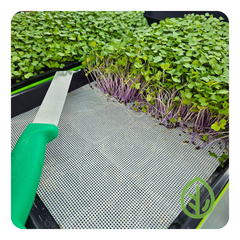
Surprisingly, it's really quick. In fact, it takes us about 30 seconds to 1 minute (depending on our movement speed) to remove leftover roots and stems from the harvested medium using our tool. You can either use our medium scraper, as seen above, or simply use your hands and gently wipe everything off. Sometimes you'll have a little bit of debris left over after using the tool or your hands, but if you run some water over the medium and use your hands to lather it, everything should come off very quickly.
Do I have to use nutrients when growing using this medium?
Technically, no. Regular tap water would still work. For instance, in this video, we grew without any additional nutrients and got great results. However, we are pro-fertilizer and recommend adding a hydroponic fertilizer like our favorite Ocean Solution 2-0-3 to your grows. Fertilizers can enhance growth and generally yield harvest weights that are on par with those achieved using soil and coco coir.
Why does soil seem to work without fertilizer, but silicone doesn't?
Soil isn't just a growing surface. Quality potting mixes contain decomposed organic matter, compost, and other natural materials that slowly release nutrients as plants grow. It's essentially a built-in slow-release fertilizer. That's why you can grow broccoli or radish on soil with just water and get decent results.
Silicone is 100% inert. It has absolutely nothing in it. No nutrients, no organic matter, nothing. It's purely a physical structure for your roots to anchor into and your seeds to sit on. Water passes through it, roots grow through it, but it contributes nothing nutritionally to your crop.
This means whatever your plants need has to come entirely from the water you give them. That's why we strongly recommend adding a hydroponic fertilizer like Ocean Solution 2-0-3 at 0.5 oz per gallon when you begin bottom-watering. You can technically grow without it. Plain water will still produce a crop, but you'll generally see better stem thickness, color, and harvest weight when nutrients are part of your routine. Think of it this way: soil feeds your plants for you, silicone puts that job in your hands. On the flip side, we don't suggest adding most liquid fertilizers to soil grows, since quality mixes are already nutrient rich. Worm castings or your own experiments are fine there, since every soil is different.
Can microgreens grown on silicone be certified organic?
This is a question worth answering honestly, because the situation is genuinely complicated.
As of 2026, hydroponically grown crops, including microgreens, can legally be certified USDA Organic. The USDA's National Organic Program confirmed this position in 2018, and a federal appellate court (9th Circuit, 2022) upheld it. So the short legal answer is yes, it's possible.
However, a significant portion of USDA-accredited organic certifiers, potentially a majority by count, refuse to certify hydroponic operations on principle, arguing that growing without soil contradicts the spirit of organic farming. Whether your specific certifier will approve a hydroponic microgreen operation depends entirely on which certifier you use. If organic certification matters to your operation, you'll want to contact your certifier directly before assuming it's available.
On silicone specifically: silicone is a synthetic material, and synthetics require explicit approval to be used in certified organic production. Silicone is not currently on the USDA's National List of approved synthetics for crop production. Some certifiers treat inert growing surfaces, including silicone, similarly to the plastic trays already used in organic production, viewing them as structural support rather than a growing medium. Others may not. Again, certifier-dependent.
If organic labeling isn't a requirement for you, none of this affects your growing. The silicone medium is food-safe, our seeds can be organic, and Ocean Solution 2-0-3 holds an active OMRI listing. Note that it is listed as Allowed with Restrictions due to its sodium nitrate content, which organic growers should verify against their certifier's requirements. You can grow clean, healthy microgreens on this medium regardless of formal certification status.
Can I use your grow medium if I'm pursuing GAP, Primus GFS, or other food safety certifications?
It's worth understanding what these programs actually evaluate so you're prepared going in.
Both USDA Harmonized GAP and Primus GFS evaluate growing media as part of their audit process. This isn't just about your overall practices. They specifically look at your growing substrate. Under the current GAP standard (effective May 2024), auditors review your approved supplier list for growing media, your written storage and handling procedures, and your records of media type and sourcing. Primus GFS goes further. Their Indoor Agriculture module includes a substrate management question where a zero score triggers automatic audit failure. Neither program tells you which medium to use, but both require that you can document what you're using, where it came from, and how you're managing it safely.
When it comes to silicone, the facts worth knowing are: it's a food-grade material that meets FDA compliance standards, its specifications are consistent and documented, and it can be fully sanitized between every grow cycle. All of which are relevant to what auditors evaluate. Soil, by contrast, cannot be sanitized between uses and supports long-term survival of pathogens like Salmonella and E. coli, which creates a more complex food safety management challenge.
That said, no growing medium eliminates food safety risk on its own. Bacteria can adhere to any surface, including silicone, and proper sanitation between every grow is essential regardless of what medium you use. The advantage silicone offers is that it can be thoroughly sanitized (boiled, soaked in hydrogen peroxide, or treated with ozone) in a way that soil simply cannot.
Documentation is the other half of it, and it's the part most growers scramble on at audit time. If you're keeping records of seed lots, media sourcing, and what happened in each tray, having that history in one place rather than scattered across notebooks makes the process considerably less painful. Our Microgreen Tracker keeps seed-lot records you in-put and per-tray notes for exactly this reason, and paid plans can export the whole history to CSV or Excel.
We'd encourage you to do your own research and work directly with your certifier or auditor before making any assumptions about how your growing medium factors into your certification process. Don't rely solely on our perspective here. Requirements and interpretations vary, and the people reviewing your operation are the right source of guidance.
How does the silicone medium actually compare to soil in practice?
We've run several head-to-head experiments on our YouTube channel comparing silicone and stainless steel reusable mediums against soil and coco coir, and here's the honest summary of what we've found from our own growing experience so far.
When the silicone medium is used with plain water and no added nutrients, the same conditions as soil, soil tends to have an advantage at harvest, which makes sense given that soil contains natural nutrients and silicone doesn't. In one of our small tray experiments growing kohlrabi with no fertilizer on any group, our silicone trays came in behind both soil and coco coir at harvest.
However, when we add nutrients to the silicone medium the way we recommend (Ocean Solution 2-0-3 at 0.5 oz per gallon) the results flip. In our 1020 tray broccoli experiment, our hydroponic group averaged 310g at harvest versus 276.5g for soil grown with plain water. We also noticed the cotyledons were bigger and more open on the hydroponic trays, and personally preferred the flavor. In our Kratky setup experiment with cabbage, silicone with nutrients came in at 319g versus 286g for soil with plain water. Soil had the added challenge of waterlogging in that setup, which silicone doesn't experience the same way. For more on this comparison, see our coco coir vs reusable medium case study.
The takeaway from our testing: silicone with nutrients can match or outperform soil in our space, but silicone without nutrients will generally trail behind. This is exactly why we push fertilizer so strongly when growing on reusable mediums.
That said, we want to be clear. These are our personal results from our grows, in our environment, with our water source and the seed varieties we chose. Your results may vary based on your soil brand, water quality, growing environment, crop variety, and experience level. We'd encourage you to run your own small comparison grows and see what works best in your specific setup. We'll keep testing and sharing what we find on our YouTube channel too.
Is mold or pests an issue with this medium?
In our experience, the vast majority of the time that white fuzz is actually root hairs, not mold. Because silicone has no soil covering the roots, root hairs are fully visible in a way you may have never seen before. They appear as fine, white, hair-like strands growing from the roots, and they disappear or become nearly invisible when misted with water. Mold, on the other hand, stays visible when wet, may look web-like or patchy, and often has a musty smell. When in doubt, give your tray a light mist and watch what happens.
That said, the risk of actual mold and other pathogens does exist with the silicone medium, just as it does with any growing medium. The good news is silicone has a real advantage here. Once your crops have established roots, you can use a spray nozzle to gently wash away decaying seed hulls directly on the tray, removing one of the most common mold triggers before it becomes a problem.
The two biggest mold drivers on silicone are overwatering and poor airflow. Silicone doesn't absorb water like soil, so it's easier to accidentally over-water. Make sure water stays in the reservoir below and never floods the medium surface. And keep a gentle fan running across your trays once they're in the light. Consistent airflow is one of your best defenses against mold.
To target active mold spots, use a 3% hydrogen peroxide solution or a food-safe anti-fungal spray directly on the affected area.
Preventative tip: If you're seeing mold consistently during germination, add a light preventative mist right after your first seeding mist. Mix 1 teaspoon of 3% hydrogen peroxide into 2 cups of water and use that as your misting solution during the germination phase. This gives your tray a buffer without harming your seeds.
At the end of the day, you are working with living organisms, and sometimes mold and pests happen even when you do everything right. For a full deep-dive on identification, prevention, and treatment, check out our complete mold prevention and identification guide.
Do these help minimize white mold?
Silicone does offer a natural advantage over soil and coco coir when it comes to mold risk. Because silicone doesn't retain water the way traditional mediums do, moisture levels in the growing area tend to stay lower, and excess moisture is the number one driver of mold. You're not dealing with a water-saturated medium sitting against your plants throughout the grow.
That said, silicone isn't mold-proof, and it's important to understand why. Even though silicone itself is an inert, non-organic surface that doesn't harbor or feed mold on its own, you are still growing living organic material on top of it. The seeds, plant matter, decaying seed hulls, root exudates, and water you introduce all contain or attract organic material that mold spores can colonize. Mold spores are also naturally present in the air of virtually every indoor environment. They can settle onto your tray, your medium, and your crops regardless of what surface they're growing on. Even the water you use can carry particulates that contribute to microbial activity. So while silicone removes one significant risk factor by not retaining moisture the way soil does, the organic nature of what you're growing means mold can still occur. The same good practices always apply: proper watering, consistent airflow, clean equipment, and thorough sanitation between grows all matter regardless of medium.
How do I know if my seeds are still viable before planting?
If you're using seeds that have been stored for a while or you're trying a new batch, do a quick germination test before committing to a full tray. Place 10 seeds between two damp paper towels, keep them at room temperature, and check daily. After 5 to 7 days, count how many sprouted. If 9 out of 10 germinated, you're at 90%, which is excellent. If only 6 or 7 sprouted, germination is lower than ideal and you may want to increase your seeding density or source a fresher batch. This simple test saves you from wasting a full tray, your growing medium, and 7 to 14 days of grow time on seeds that won't perform. For more on seed sourcing, see our microgreens seed quality and food safety guide.
How do I store my reusable grow medium?
To prevent your reusable silicone grow medium from developing creases or folds, it's best to store them in a flat position. Using an additional tray, either 10x20 or 10x10 in size, specifically for storage purposes is ideal.
Where do you ship currently?
Currently we only ship this product within the US through our website.
1 Year Warranty on all Mesh Screens
1 Year Warranty Coverage: Covers manufacturing defects, material failures, and premature deterioration under normal use. Does not cover damage from improper cleaning, cutting, or misuse. Cutting or trimming the medium exposes the fiberglass core and voids the warranty, which is why we always point growers to the size that matches their tray. Contact us at info@onthegrow.net to file a warranty claim with photos of the issue.
I still don't understand which seeds work?
Please watch this video on the topic to learn more: "Which seeds can and cannot grow on reusable mediums?"
Final Thoughts
We've tried to cover all the essentials about our reusable silicone grow medium, but if there's anything we've overlooked, please feel free to point it out, and we'll be sure to include it. Our goal is to ensure you have the best experience with OTG products. We genuinely care about our community and are committed to simplifying the process of growing and managing microgreens. That's why we've developed the patent-pending "Microgreen Tray Clip Labelers," designed to make bottom watering and labeling of your microgreen crops quicker and more efficient, and why we built Microgreen Tracker to handle the record-keeping side.
Stay tuned for more exciting updates and offerings on our site. Don't forget to subscribe to our email list for early access to new products, exclusive information, flash sales, and more, even before we announce them to our larger social media audience.
We hope to make you a be-leafer if you aren't already. And if you are looking for the best microgreen growing advice, start with On The Grow.
Related Blogs You Might Enjoy
- Meet the Microgreen Tracker: The App We Built to Track Our Grows
- How to Set Up the Microgreen Tracker App and Plant Your First Tray
- Compatible Microgreen Seeds for Reusable Grow Mediums
- How to Clean and Sanitize Microgreen Trays and Reusable Mediums
- Stainless Steel Reusable Grow Medium: Complete Guide and Why We Transitioned to Silicone
- Case Study: Coco Coir vs. Reusable Grow Medium (High Seeding Density)
- The Best Hydroponic Grow Mediums for Microgreens (Ranked)
- How to Water Microgreens: The Complete Watering Guide
- Best Fertilizers and Nutrients for Microgreens
- Microgreens and Mold: The Complete Guide to Prevention, Identification, and Treatment
- Top Microgreen Growing Mistakes and How to Avoid Them
- Why Are Your Microgreens Staying Short? Common Causes and Fixes
- The Complete Microgreen Lighting Guide
- How to Grow Microgreens in 10x20 Trays: Complete Guide
- How to Grow Microgreens in a Sprouting Tray
- How to Grow Broccoli Microgreens: A Complete Step-by-Step Guide
- How to Grow Radish Microgreens: The Fastest Beginner Crop
- How to Grow Sunflower Microgreens: Complete Step-by-Step Guide
- How to Grow Pea Microgreens (Pea Shoots): A Complete Guide
- Growing Microgreens Using the Kratky Method: A Comprehensive Guide
- What to Do With Used Microgreen Grow Medium After Harvest
- Can You Eat Microgreens Raw? Safety, Nutrition and How To Eat Them
- Best Microgreen Growing Advice and Resources
A Note on This Blog's Content
The information in this blog is based on a combination of our own hands-on growing experience, feedback and experiences shared by our customers, and information sourced from publicly available studies, regulatory documents, and industry resources. We do our best to keep this blog accurate and up to date as new information becomes available, but we cannot guarantee that all information reflects the most current research, regulatory standards, or certification requirements at the time you are reading it.
Nothing in this blog should be taken as legal, regulatory, food safety, health, or certification advice. If you are growing microgreens commercially, pursuing food safety certifications, or making business decisions based on this information, we strongly encourage you to conduct your own research and consult with qualified professionals or the relevant certifying bodies directly.
The results and opinions shared in this post are based on our own first-hand testing in our specific, controlled grow space. Any mention of a brand or product reflects our own experience, not a sponsored or definitive review. Your climate, water, seed, and setup are different from ours, so your results can vary. We always encourage you to run your own experiments and see what works best for you.
This post contains affiliate links. We may earn a small commission on qualifying purchases at no extra cost to you. We only link to products we use and recommend. See our full affiliate disclosure.
On The Grow, LLC makes no guarantees about growing outcomes, certification eligibility, or the accuracy of third-party information referenced herein. Growing results vary based on individual environment, experience, water quality, seed source, and many other factors outside our control.
— On The Grow®, LLC
Happy growing!
Published: May 26, 2023
Updated: August 7, 2026
All content shown is property of On The Grow®, LLC
Estoy interesada en la compra del sustrato de silicona pero no se como adquirirlo me pueden informar? Gracias!!
Hi Mandi & C.J. I moved and don’t have the space to use coco coir anymore. I was looking into the silicone on your channel but wondering- is it possible at all to grow red amaranth on it? I know you said they can go through the holes. That is one of my most favourite crops. Is there a way to grow it on silicone or do I have to give that crop up? Thanks guys!
—Jax
Hi C.J. and Mandi,
Loved your videos and finally decided to try growing our own microgreens. We really like both the silicon and stainless-steel mesh and had a semi successful first grow. One problem we are noticing is that because the reusable mediums are much thinner, we are not getting good contact with the weighted tray above during germination. We tried the two-inch trays thinking they might fit better but it didn’t work. Do you have any products or suggests for something that would fit the 1-inch trays and lay snug on the seeds while using either the silicon or stainless-steel mesh mediums?
Hi! I’ve been a YouTube subscriber for awhile now though I have yet to have a successful grow. But, I’m wondering if you can experiment with spent coffee grinds as a grow medium. There are some videos on YouTube but I don’t trust them. I really only trust you two to make a successful (pass or fail) experiment. So please, pretty please? I do have a lot of coffee grinds and I don’t have a garden or a window garden. And there’s only so much body scrubbing I can do with these grinds. Thanks!!!
Thanks CJ for the little note you wrote me and the free tray clips! My first order experience was outstanding. I will be back!